Batu Bolong is a submerged pinnacle that splits the current into two streams, leaving a narrow protected lee on the downstream side. You dive the lee, you stay above the drop-off, and you never round the tip. Depth runs 5 to 35 metres with constant moderate-to-strong current, and it is an advanced site.
What the site is
Batu Bolong is a rock spire in the channel between Komodo and Tatawa, most of which is underwater. Current runs across it almost constantly, rated 3 to 4 out of 5, and the flow splits around the pinnacle. That split is the whole site: on the upstream face the water is unmanageable, on the flanks it accelerates, and directly downstream there is a pocket of calmer water where you can hang and watch.
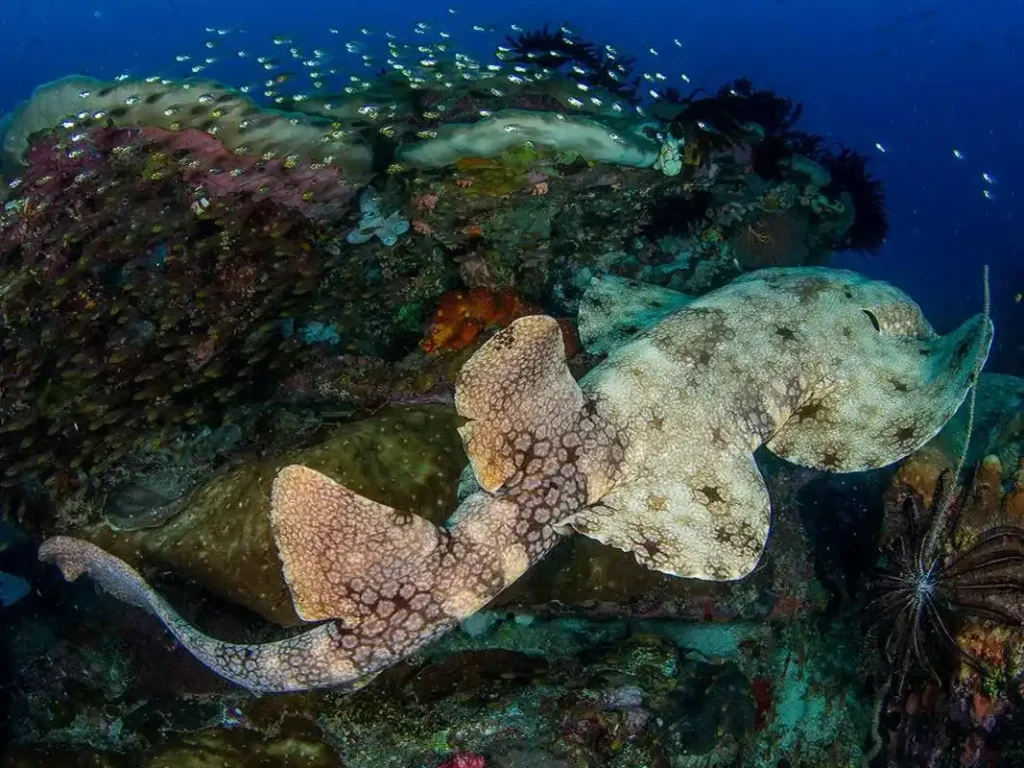
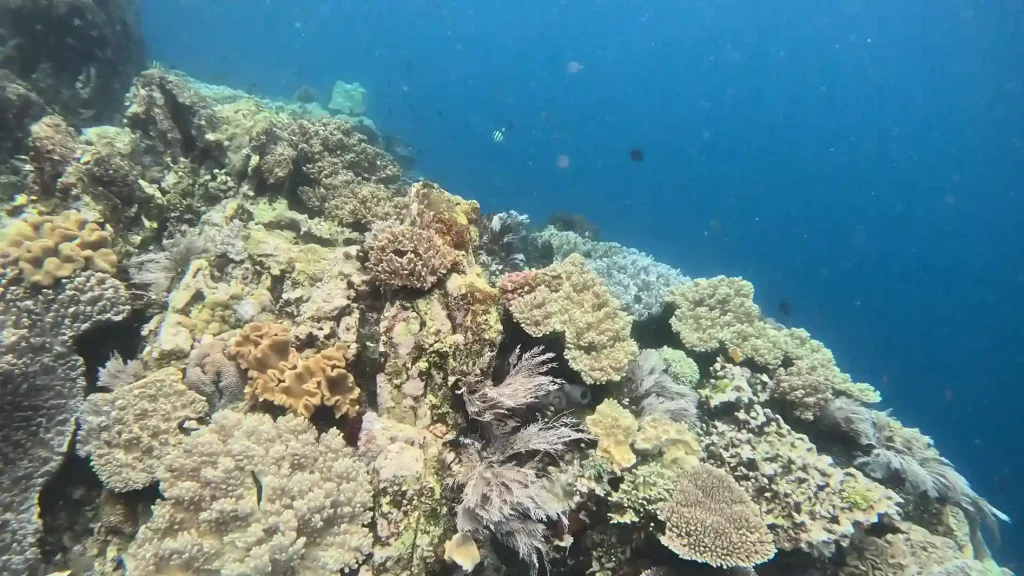
Because the pinnacle is permanently washed with nutrient-rich water and nothing has ever anchored on it, the coral cover is the densest most divers will see anywhere, and the fish stack up in layers — anthias in a haze over the hard coral, fusiliers above them, trevally cutting through, reef sharks patrolling the edge, Napoleon wrasse and turtles working the slope.
Batu Bolong at a glance
Parameter
Detail
Depth
5 to 35 metres; the interesting band is 8 to 25
Current
Constant, moderate to strong (3–4 of 5)
Level
Advanced or intermediate-to-advanced; generally Advanced plus 20 to 30 logged dives
Entry
Negative entry, dropped on the lee side
Marine life
Dense fish biomass, reef sharks, turtles, Napoleon wrasse
Hazards
Down-current off the tips, up-welling on the flanks, blue-water separation
How to read the current from the surface
Before the tender drops you, the guide is reading three things, and you can read them too.
The surface texture around the rock. A pronounced standing wave or a line of disturbed water on one side tells you which face is upstream. The smooth patch behind it is your lee.
The direction of any floating debris or foam line. It shows the flow direction more reliably than the surface chop, which is affected by wind.
Where the boat sits at anchor or on station. The tender crew position themselves to drop you downstream of the pinnacle so you are pushed onto it rather than away from it.
Tide phase matters more than tide height. Slack water and the first hour of a building current give the classic Batu Bolong dive. Two hours into a strong flood the same site is survivable but not enjoyable, and the fish move down and off the exposed face.
The dive, in the order it happens
Negative entry: BCD empty, drop immediately, no time floating on the surface where the current will take you past the site. Descend fast to the shelter of the lee. Once there, the site is unexpectedly calm — that is the point. From the lee you work up and down the protected side, staying above the drop-off and inside the shadow of the pinnacle.
The instruction repeated in every briefing at this site is simple: do not round the tip. The corners where the split flow reconverges are where divers get taken, and where the down-currents live. If you find yourself sliding, get onto the reef using a reef hook or your hands on dead rock, deflate, and let the guide come to you. Do not fin upward against a down-current; you will lose the fight and your gas at the same time.
What the briefing is actually telling you
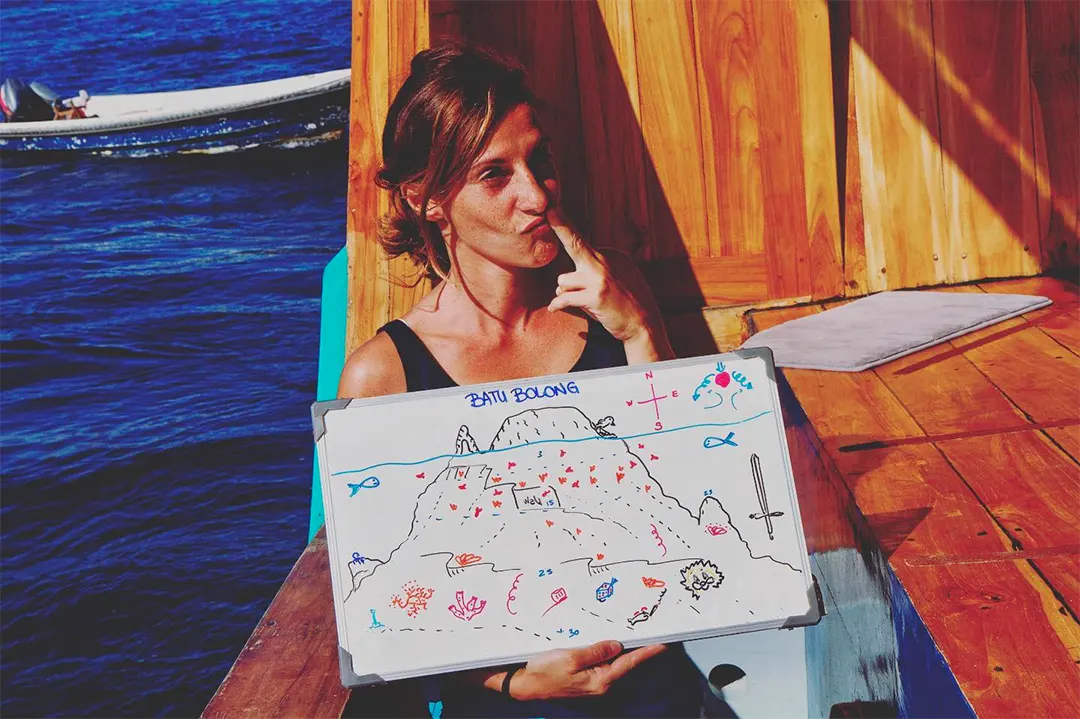
A good Batu Bolong briefing includes the current direction, the agreed lee side, the maximum depth, the turn pressure, and the plan for a separation — usually ascend on the protected side, deploy an SMB, and drift for pick-up. If a briefing skips the separation plan, ask for it. In Komodo the realistic incident is not equipment failure; it is a diver who ended up in blue water on the wrong side of a pinnacle.
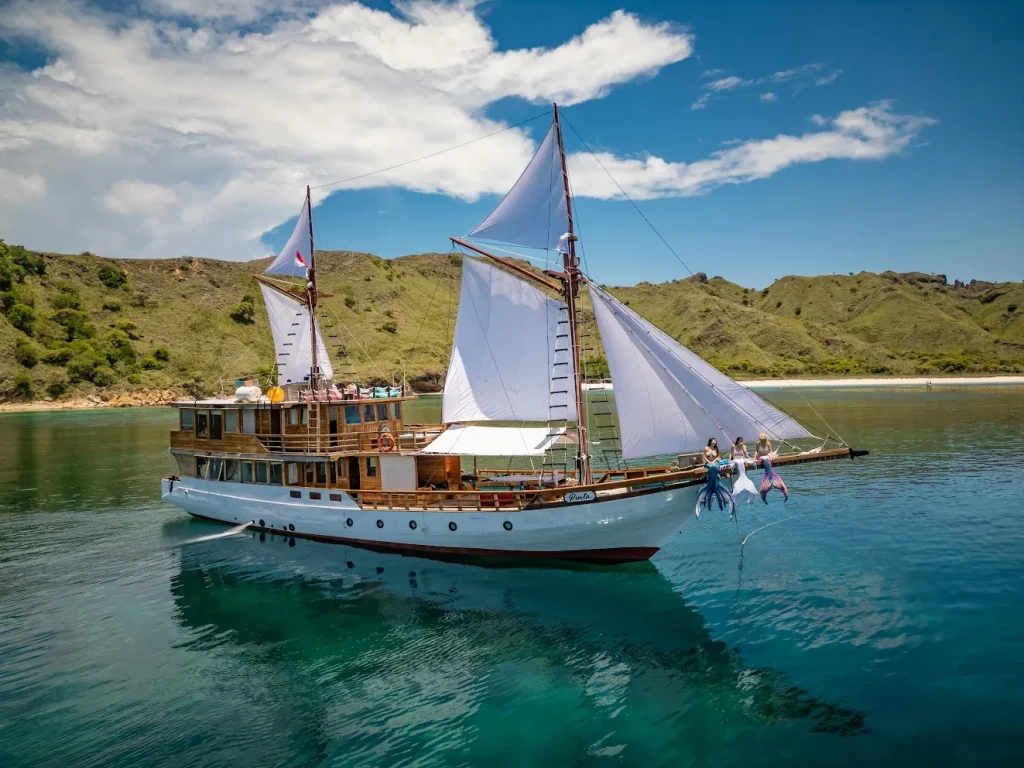
Guide ratios are the other half of the answer. The PADI standard of four divers per guide is the working ratio on Pinta, and on a site like this the ratio is the difference between a problem noticed at 30 seconds and a problem noticed at three minutes.
Who should skip it
Divers below Advanced, divers with fewer than roughly 20 to 30 logged dives, divers who have not dived in over a year, and anyone uncomfortable with a negative entry. That is not gatekeeping for its own sake. There are excellent alternatives running the same morning — Siaba Besar for turtles and macro at 5 to 18 metres, Tatawa Besar as a soft-coral drift for beginners to intermediates, Pink Beach for a shallow coral garden. A dive team that offers you the alternative rather than the peer pressure is the one you want.
Frequently asked questions
How strong is the current at Batu Bolong?
Constant, moderate to strong, rated around 3 to 4 out of 5. The pinnacle splits the flow, so the protected lee on the downstream side is genuinely calm while the flanks and tips accelerate.
What certification do I need for Batu Bolong?
Advanced or solid intermediate, generally with around 20 to 30 logged dives, plus comfort with a negative entry. Divers below that level are better served the same morning at Siaba Besar, Tatawa Besar or Pink Beach.
Why must you not swim around the tip of Batu Bolong?
Because the split current reconverges at the tips, which is where the down-currents form and where divers get pushed into blue water. The dive stays in the lee and above the drop-off for that reason.
What do you do in a down-current at Batu Bolong?
Get onto the reef with a reef hook or a hand on dead rock, deflate, stabilise and signal. Do not fin upward against the flow. Ascend on the protected side and deploy an SMB if you are separated.
What will I see at Batu Bolong?
Some of the densest hard-coral cover and fish biomass in Komodo: anthias in clouds, fusiliers, trevally, reef sharks along the edge, plus turtles and Napoleon wrasse working the slope.
Pinta is operated and sold by Komodo Luxury, the Labuan Bajo charter operator running trips in Komodo National Park since 2015. Reservations, dive-team questions and date holds: WhatsApp +62 811 3823 875 or sales@komodoluxury.com.
Share this
Sailing This Season?
Send your dates and we will check the calendar before you book anything.

 Komodo Diving Guides