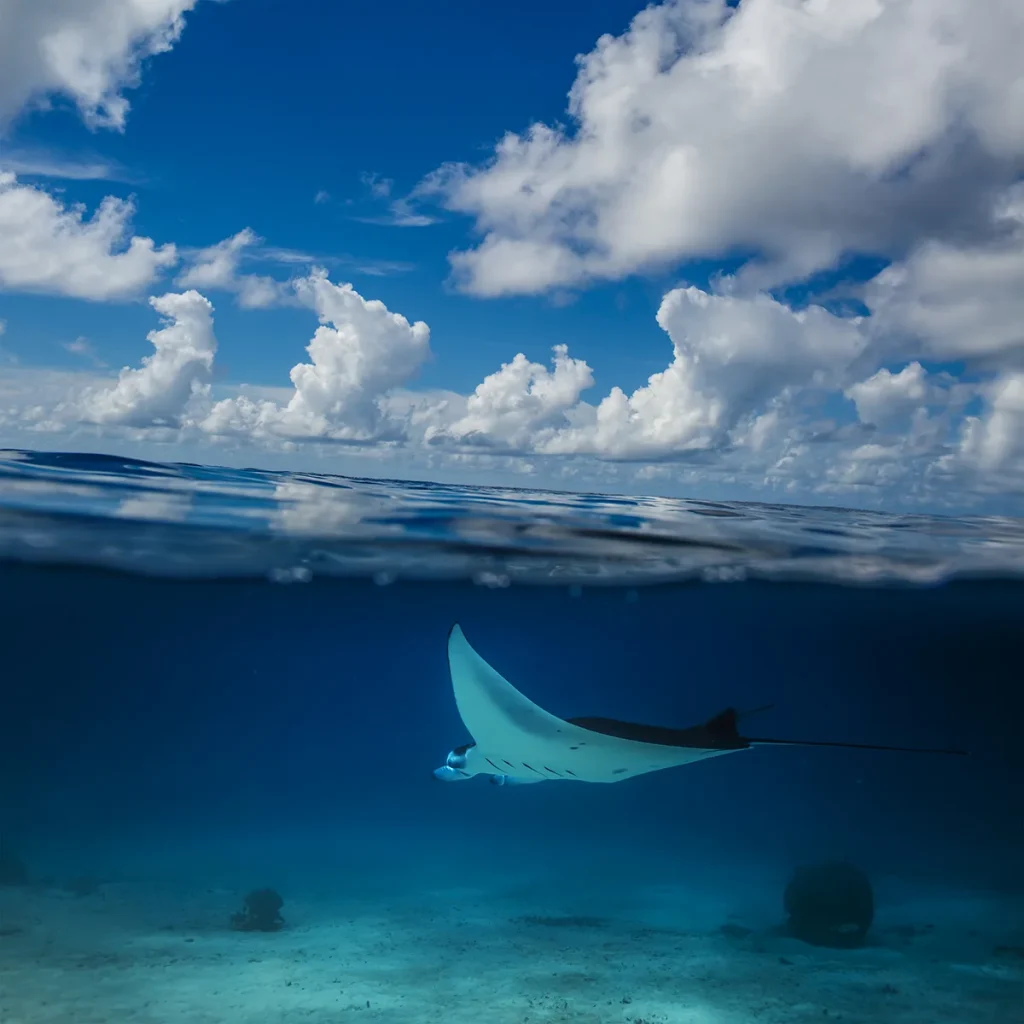
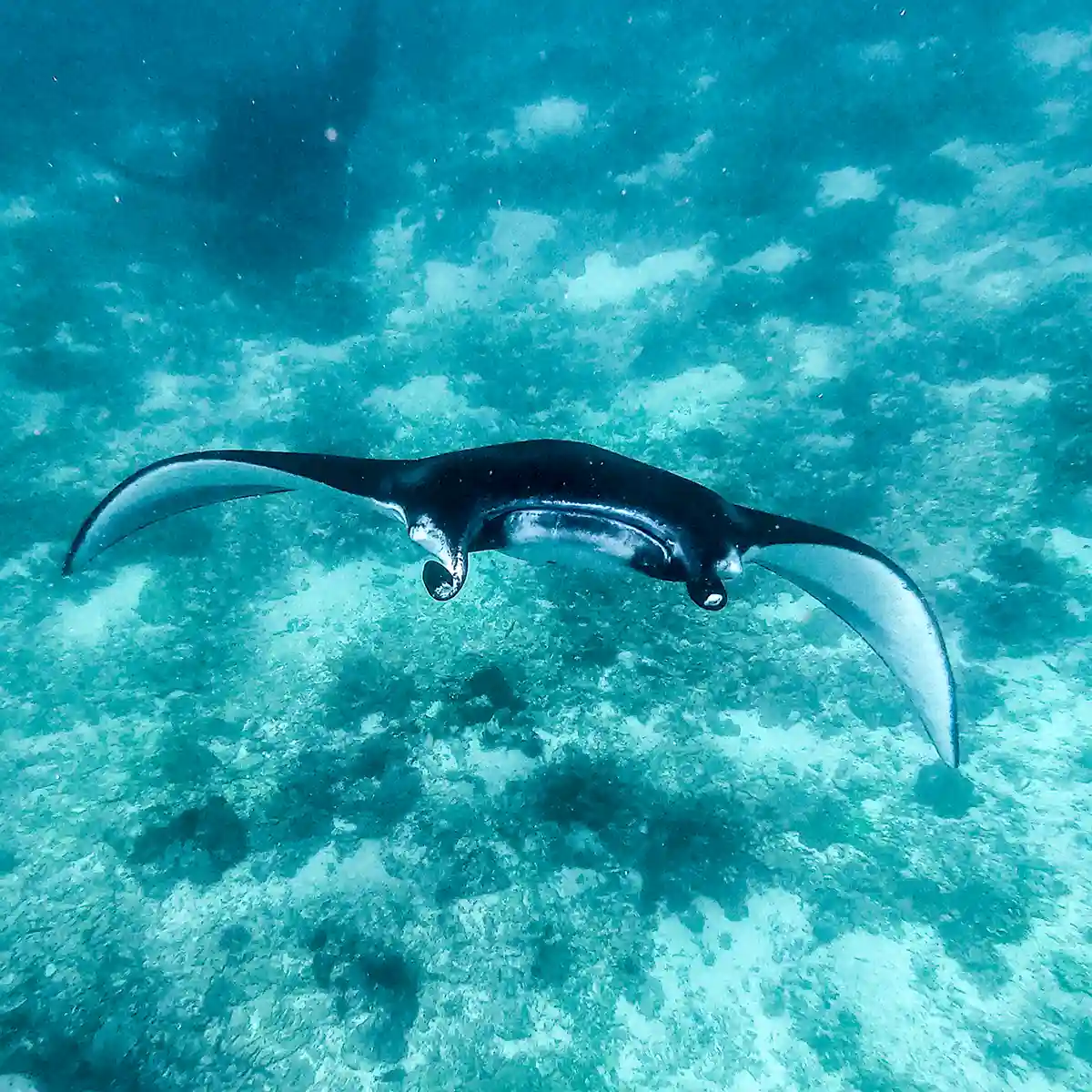
Manta rays are present in Komodo all year at Karang Makassar, the site most operators call Manta Point. Density peaks from December to March, when plankton-rich monsoon water fills the channels — the same months that bring the roughest seas. Manta Alley in the south holds the highest concentrations but needs a longer charter.
The short version, month by month
Manta probability against sea conditions in Komodo
Period
Manta density
Sea state
What this means for booking
December – March
Peak. Plankton-rich water, highest counts of the year
Roughest. Monsoon; some boats go to maintenance
The best manta window is the worst weather window. Book it deliberately.
April – June
Good, steady at Karang Makassar
Calmest of the year, best visibility
The balanced choice for most divers
July – August
Good
Good visibility but windy in open straits and around Padar
Peak season pricing, busiest sites
September – November
Good, building towards the peak
Calm, excellent visibility
The underrated window — shoulder pricing, quiet water
Two things fall out of that table. Mantas are never absent, so a trip in June is not a failed manta trip. And the peak is real but it is bought with sea state, which is why a December charter should be booked by someone who knows what a monsoon crossing feels like.
Where they actually are
Karang Makassar, the site called Manta Point
A long, rubble-bottomed channel at 8 to 18 metres with a gentle to moderate drift, rated 2 to 3 out of 5 for current and accessible to all certification levels from around ten logged dives. Mantas use it as a feeding and cleaning corridor year-round. You drift, you hold position when a ray comes through, and you do not chase. This is the site that makes Komodo manta-reliable rather than manta-lucky.
Mawan
A cleaning station at 10 to 25 metres with moderate to strong current, rated 3 to 4 out of 5. Intermediate to advanced. Fewer animals than Karang Makassar on an average day but a better chance of watching a manta stationary over a cleaning station rather than passing.
Manta Alley, in the south
Five to 25 metres, moderate to strong current with surface chop, negative entry, intermediate to advanced. This is where the highest densities are reported — 20 to 50 or more animals on a good day. It is also a serious run from Labuan Bajo, realistically needing a seven-day charter or longer, and it is weather-dependent from December to March, which is precisely when the density peaks. That tension is the central planning problem of manta diving in Komodo.
Shotgun, or The Cauldron
Ten to 25 metres, very strong current with a genuine shotgun effect through the channel, advanced only. Mantas appear in the channel. This is not a site you dive for the mantas; it is a site you dive for the ride, and the mantas are a bonus.
Can snorkellers see mantas?
Yes, at Karang Makassar. The channel is shallow enough that a competent snorkeller in a gentle drift sees animals passing beneath. The requirements are honest ones: comfort in open water away from the boat, a willingness to be picked up by the tender rather than swim back, and acceptance that the drift decides the direction. On a mixed charter this is what lets a non-diving partner meet the same animals on the same afternoon.
How many will you see?
The truthful answer is a range, not a number. At Karang Makassar in the peak window, several animals in a dive is a normal outcome and a blank dive is uncommon. In the calm shoulder months, one to a handful is typical. Manta Alley in the right conditions produces the counts that end up in magazines. Anyone quoting you a guaranteed number is selling, and mantas do not read the brochure.
Diving etiquette that actually changes your odds
Stay low and still. Mantas approach divers who are not moving toward them.
Do not swim above an animal. Bubbles from below turn a curious manta into a departing one.
Hold position on the sand or rubble channel, not on coral.
Let the drift do the work. Finning hard against current in Karang Makassar burns your gas and empties the channel.
No touching, no chasing, no flash directly at an approaching animal.
Frequently asked questions
When is manta season in Komodo?
Density peaks from December to March, when plankton-rich monsoon water fills the channels. Mantas are present year-round at Karang Makassar, so April to November trips still see them, usually in smaller numbers.
Where is Manta Point in Komodo?
Karang Makassar, a rubble-bottomed channel at 8 to 18 metres with a gentle to moderate drift. It is rated for all certification levels from around ten logged dives, which makes it the most accessible manta site in the park.
How many mantas will I see in Komodo?
Several in a dive is a normal outcome at Karang Makassar during the December-to-March peak, and one to a handful is typical in the calmer months. Manta Alley in the south has produced reported counts of 20 to 50 or more on good days.
Can snorkellers see manta rays in Komodo?
Yes, at Karang Makassar, where the channel is shallow enough for animals to pass beneath a snorkeller. It requires comfort in open water, a drift entry and a tender pick-up rather than a swim back to the boat.
Do I need a long charter to reach Manta Alley?
Realistically yes, seven days or more, because the southern run costs most of a day each way. It is also weather-dependent from December to March, which is exactly when southern manta density is highest.
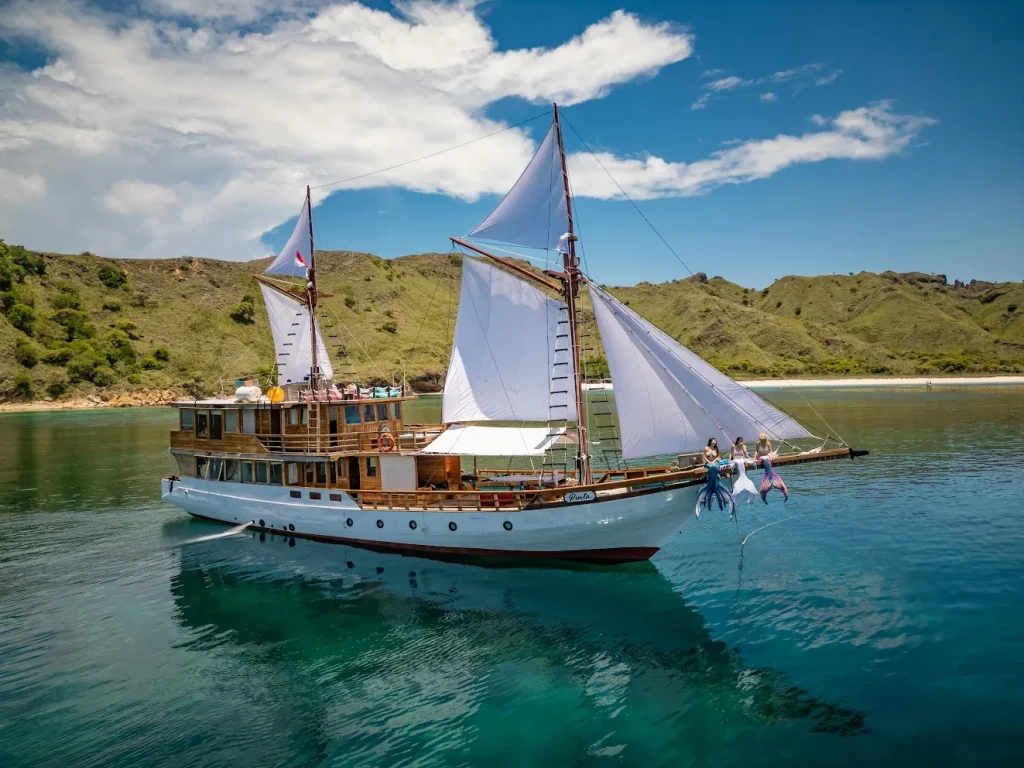
Pinta is operated and sold by Komodo Luxury, the Labuan Bajo charter operator running trips in Komodo National Park since 2015. Reservations, dive-team questions and date holds: WhatsApp +62 811 3823 875 or sales@komodoluxury.com.
Share this
Sailing This Season?
Send your dates and we will check the calendar before you book anything.

 Komodo Diving Guides