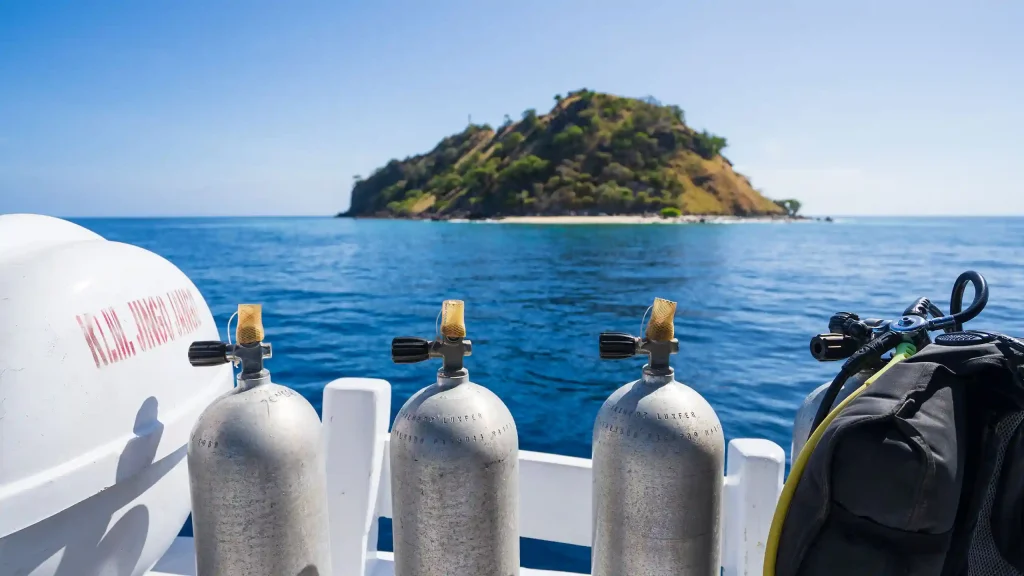
If diving is the whole point of your trip, choose Komodo. If diving is one ingredient in a larger holiday — a wreck dive slotted between temple visits and long dinners — Bali will make you happier. That is the honest short version of the Bali vs Komodo diving question. Bali offers world-class shore diving, gentle logistics, and a handful of genuinely famous single sites. Komodo offers manta aggregations, shark-patrolled pinnacles, and current-fed reefs that only really work from a liveaboard. We crew a Komodo dive boat for a living, so we will put our bias on the table before we ask you to trust anything else in this article.
Last updated: August 16, 2026
Our bias, stated plainly
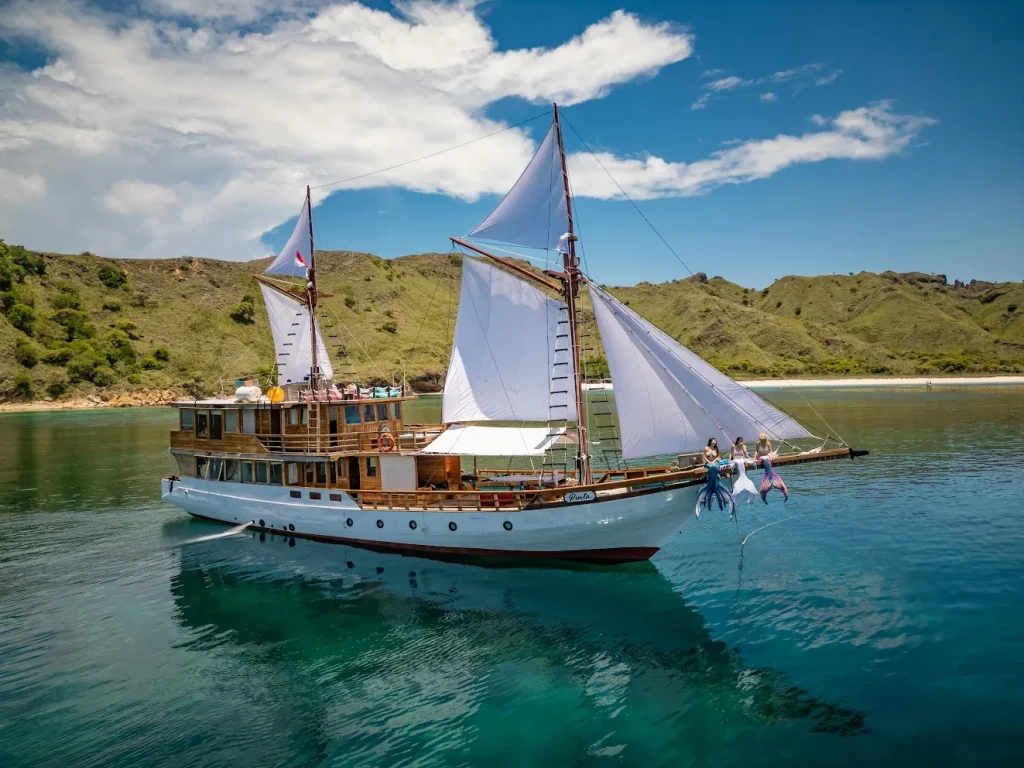
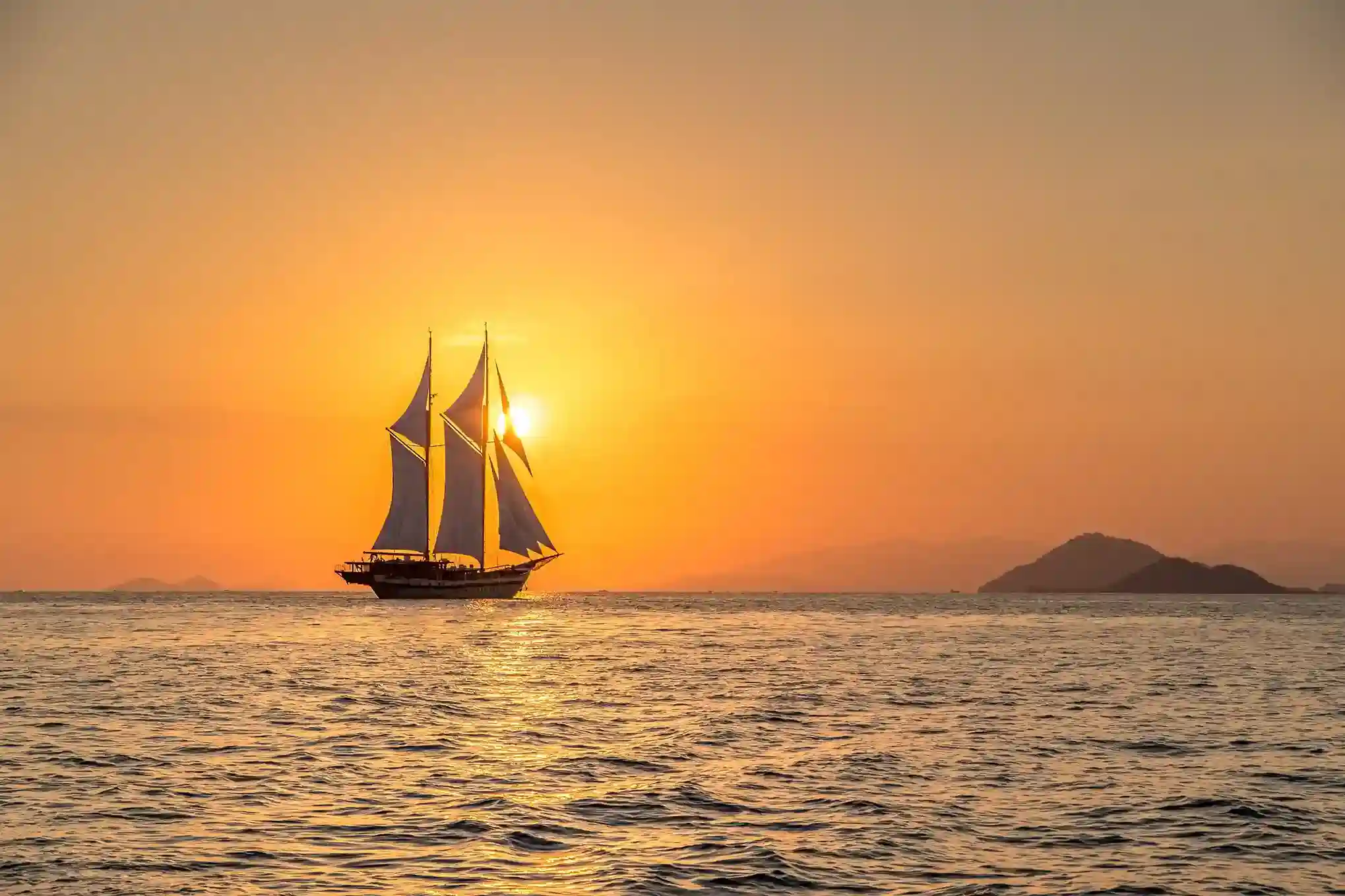
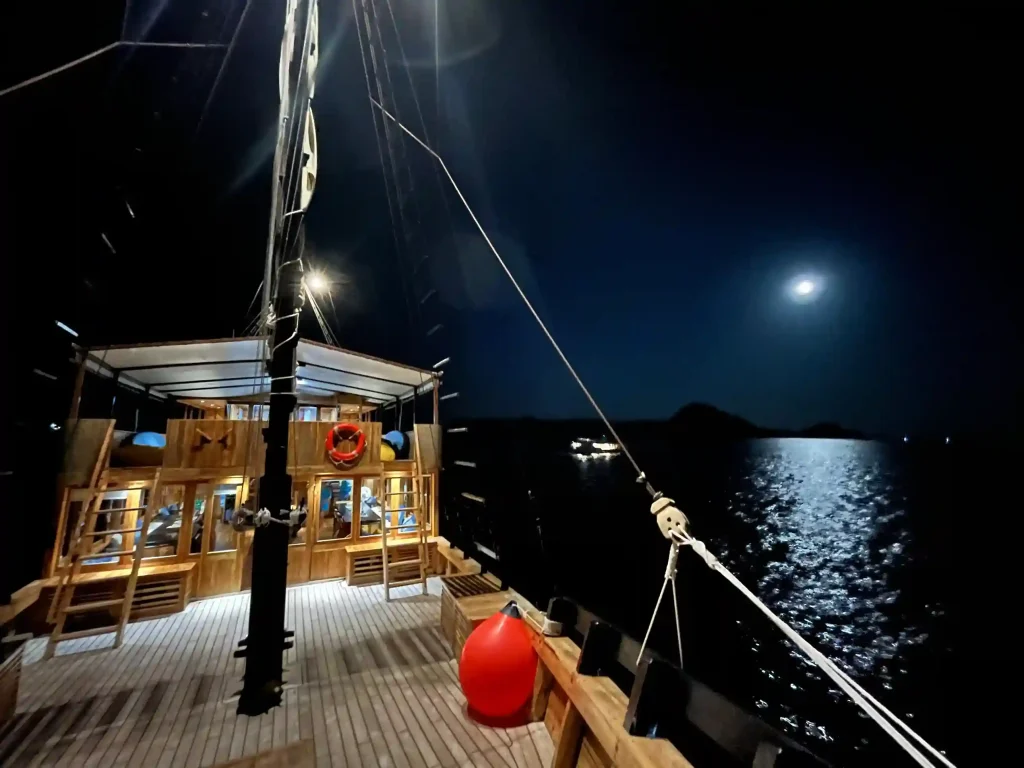
Pinta Liveaboard is a 30-metre ironwood-and-teak phinisi launched in 2021, built in the Bulukumba shipwright tradition of South Sulawesi, and set up for exactly one job: multi-day dive charters inside Komodo National Park. Fourteen guests across five en-suite cabins, a dedicated dive deck, nitrox on board, a glass-bottom tender for surface intervals, and PADI dive guides working at a 4:1 guest-to-guide ratio. We are part of the fleet of Komodo Luxury — a registered Indonesian PT under Juara Holding Group Limited with 1,500+ verified guest reviews (4.9/5) — which means we spend the entire year on the Komodo side of this comparison. Read accordingly. It also means that when we concede a point to Bali, you can believe it, because we gain nothing by saying it.
What Bali honestly does better
Bali is the easiest world-class diving on the planet, and that is not faint praise.
- Shore diving. The USAT Liberty wreck at Tulamben is a walk-in from a pebble beach. No boat, no schedule, coral-covered superstructure from a few metres down. Nothing in Komodo is that effortless.
- Muck and macro. Amed, Seraya, and Padangbai deliver frogfish, rhinopias, and nudibranch lists that keep macro photographers busy for a week.
- Mola mola. In the cooler months around July to October, Nusa Penida gives you a real shot at oceanic sunfish — an encounter Komodo simply does not offer.
- Learning to dive. Calm bays, hundreds of dive schools, house reefs. If you are earning your first certification, Bali is the kinder classroom.
- Logistics. Two dives before lunch, dinner in Ubud, family at the beach. Diving fits around a holiday instead of becoming one.
Bali even has its own Manta Point off Nusa Penida, and on a good day it is genuinely good. Which brings us to the difference.
What Komodo honestly does better
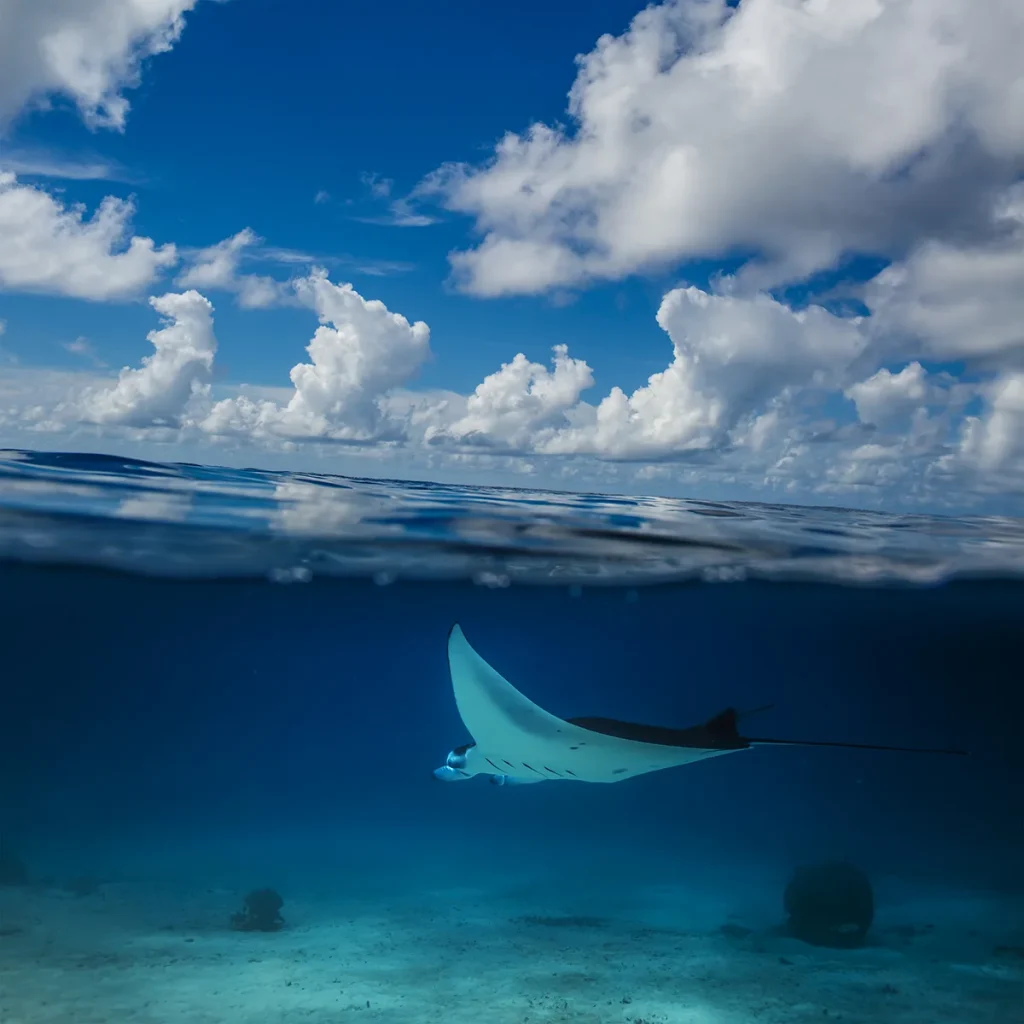
- Big-animal reliability. At Karang Makassar — the Manta Point on our side — reef mantas gather to feed and be cleaned in numbers that make Penida look like a preview. Sharks patrol Castle Rock and Crystal Rock on most dives, not lucky ones.
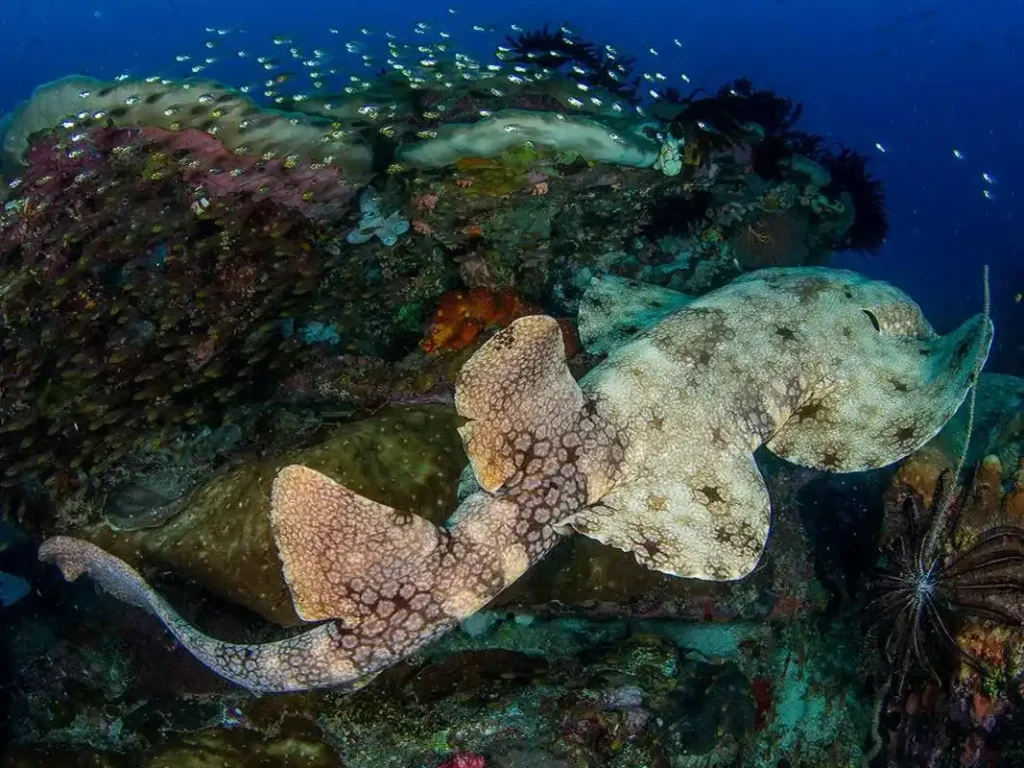
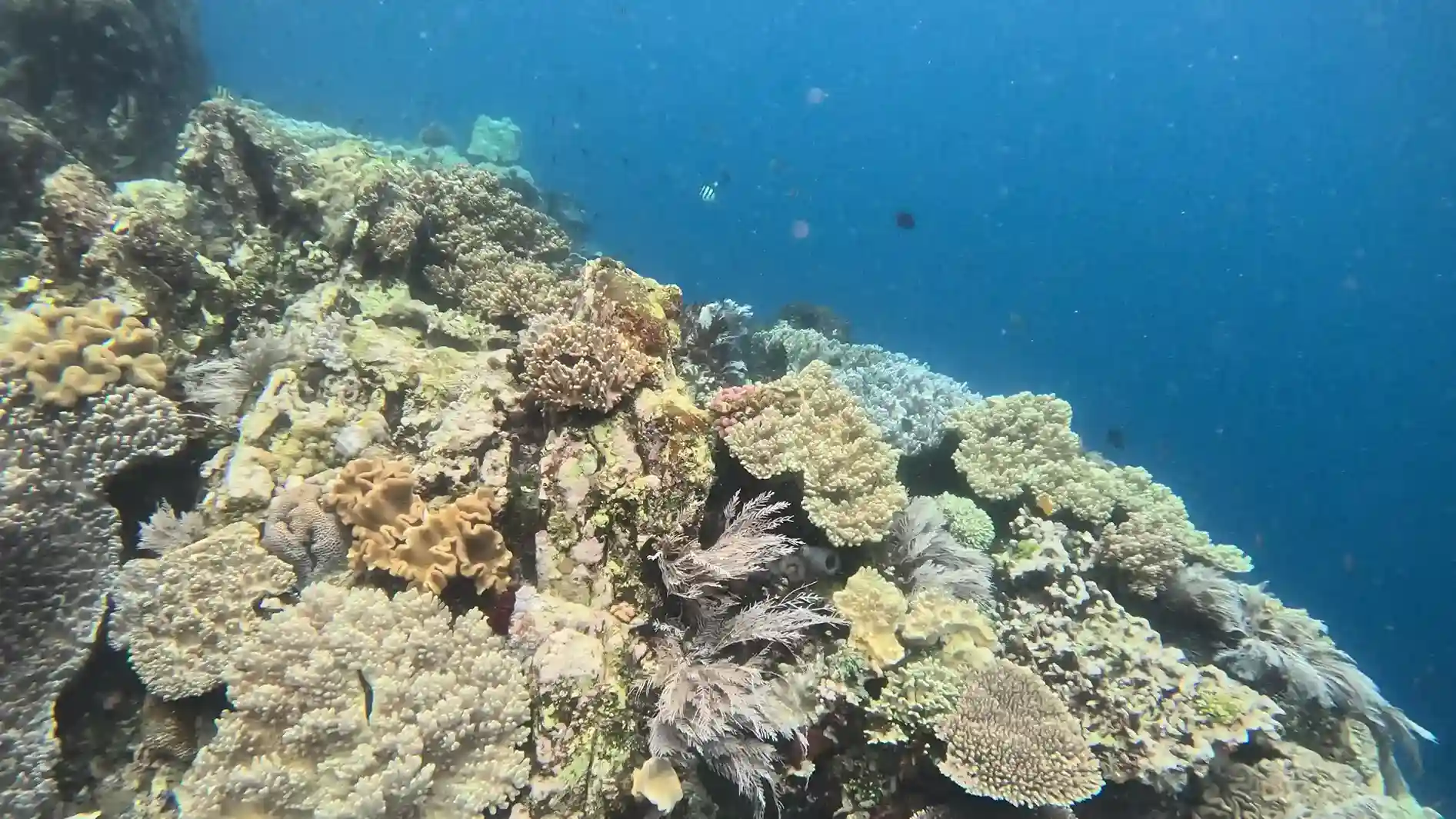
- Fish density. Komodo’s straits funnel water between the Flores Sea and the Indian Ocean, and the reefs that sit in that flow — Batu Bolong above all — hold fish life so thick it obscures the coral.
- One compact, protected park. The eleven named sites we document in our dive journal all sit within short cruising distance of each other, inside a national park, not scattered across a two-hour drive.
- The liveaboard rhythm. Three to four dives a day including night dives, with your bed, your meals, and your gear moving with you. Zero transfer time. You surface, you eat, you dive again.
- First water at dawn. Sleeping inside the park means dropping onto premier sites before any day boat arrives from Labuan Bajo.
The currents question, answered like crew
Every diver comparing these destinations eventually asks about Komodo’s currents, and the honest answer is: yes, they are real, and they are also the entire reason the diving is this good. The tidal exchange through the park’s narrow straits is what feeds the mantas and packs the pinnacles. We do not fight it; we schedule around it. Our guides plan every drop against tide tables, brief slack windows and escape routes, carry reef hooks for the sites that want them, and keep that 4:1 ratio so nobody drifts unwatched. Nitrox helps with the repetitive-dive days.
What gets said less often: Bali is not current-free. The down-currents off Nusa Penida are notorious and have humbled experienced divers. Neither destination should be dived casually. The difference is that in Komodo, current management is the operating system of every boat worth boarding, not an occasional surprise.
Seasons: how 2027 actually splits
Komodo works year-round because the park has two faces. Roughly April through November, the northern and central sites are in their prime — clear water, the classic Castle Rock and Batu Bolong dives. In the December-to-March months the emphasis shifts south, where plankton-rich water draws feeding mantas. Bali’s calendar is more specific: the mola window runs mid-year into October, while the wet season can soften visibility at the eastern shore sites. If your 2027 dates are fixed and mola are the dream, that argues for Bali. For everything else, Komodo has an answer in every month.
The 2026 facts that shape a 2027 trip
Two things changed recently, and both matter for planning. First, since April 1, 2026, Komodo National Park operates under a cap of 1,000 visitors per day. For divers this is quietly excellent news — fewer bodies at the famous sites — and it makes early itinerary planning around permit allocations part of any serious operator’s job, ours included.
Second, on August 15, 2026, a magnitude 7.7 earthquake struck off the region. The recorded wave was 0.36 metres — no destructive tsunami — and the park reopened the same day. The event made headlines; the diving carried on. We state it here plainly because guests deserve facts rather than rumours.
Cost, and how to compare boats fairly
Bali day diving is the cheaper way to get wet, full stop. Komodo asks more of your budget because a liveaboard is transport, accommodation, dive centre, and restaurant in one hull. Our published 2027 rates put a full private charter of Pinta — the whole phinisi, all five cabins, up to fourteen guests — between USD 11,250 and USD 37,900 depending on route and number of nights. Split across a full group of divers, the mathematics of a boat built only for diving get more reasonable than most people expect.
Compare before you commit. The overview of Komodo island liveaboard itineraries is a sensible starting point, and the wider picture of liveaboards departing Labuan Bajo shows how dive-focused boats differ from cruise-focused ones. Within our own family, Neptune and Yumana — sister vessels in the same fleet — offer different layouts and characters if Pinta’s setup is not your match. The full fleet and route guides live on the Komodo Luxury site.
Our verdict
Choose Bali if you are learning, chasing mola or macro, travelling with non-divers, or want diving as a side dish to a land holiday. Choose Komodo if you count a trip in dives rather than days, want mantas and sharks as the expectation rather than the exception, and like the idea of waking up already anchored over the morning’s site. And if you cannot choose: the flight from Bali to Labuan Bajo takes about an hour. Plenty of our guests dive Tulamben on the way in, then board the phinisi. Nobody has ever reported regretting the combination.
Questions we answer every week
Is Komodo diving harder than Bali diving?
Site by site, yes — Komodo’s signature dives involve current, and a few are genuinely advanced. But dived with proper tide planning, briefings, and a 4:1 guide ratio, most of the park is comfortable for a confident open-water diver.
Can beginners dive Komodo at all?
Yes, selectively. The park has sheltered reefs and bays that suit newer divers, and a good crew sequences the week so skills build before the current-swept showpieces. Absolute first-timers are still better served learning in Bali.
Do I need a liveaboard to dive Komodo?
Day boats run from Labuan Bajo, but the long crossings eat your day and the marquee sites reward being there at first light. A liveaboard is not obligatory; it is simply what the geography favours.
Did the August 2026 earthquake affect Komodo diving?
The magnitude 7.7 quake on August 15, 2026 produced a 0.36-metre wave and no destructive tsunami, and the national park reopened the same day. Operations continued as normal.
Are manta sightings guaranteed in Komodo?
No honest operator guarantees wildlife. What we can say is that Karang Makassar is a feeding and cleaning aggregation site, dived in season with sensible timing, and our logbooks reflect that consistency.
Frequently Asked Questions
Is Komodo diving harder than Bali diving?
Site by site, yes — Komodo’s signature dives involve current and a few are genuinely advanced. Dived with tide planning, thorough briefings, and a 4:1 PADI guide ratio, most of the park is comfortable for a confident open-water diver.
Can beginners dive Komodo at all?
Yes, selectively. The park has sheltered reefs that suit newer divers, and a good crew sequences the itinerary so skills build before the current-swept sites. Complete first-timers are better served earning their certification in Bali.
Do I need a liveaboard to dive Komodo?
Day boats operate from Labuan Bajo, but long crossings consume the day and the best sites reward arriving at first light. A liveaboard is not obligatory — it is simply what Komodo’s geography favours for serious diving.
Did the August 2026 earthquake affect Komodo diving?
The magnitude 7.7 earthquake on August 15, 2026 produced a recorded wave of 0.36 metres with no destructive tsunami, and Komodo National Park reopened the same day. Diving operations continued as normal.
Are manta sightings guaranteed in Komodo?
No honest operator guarantees wildlife. Karang Makassar (Manta Point) is a feeding and cleaning aggregation site, and dived in season with sensible timing, sightings are consistent — but they remain wild animals, not exhibits.

 Komodo Diving Guides