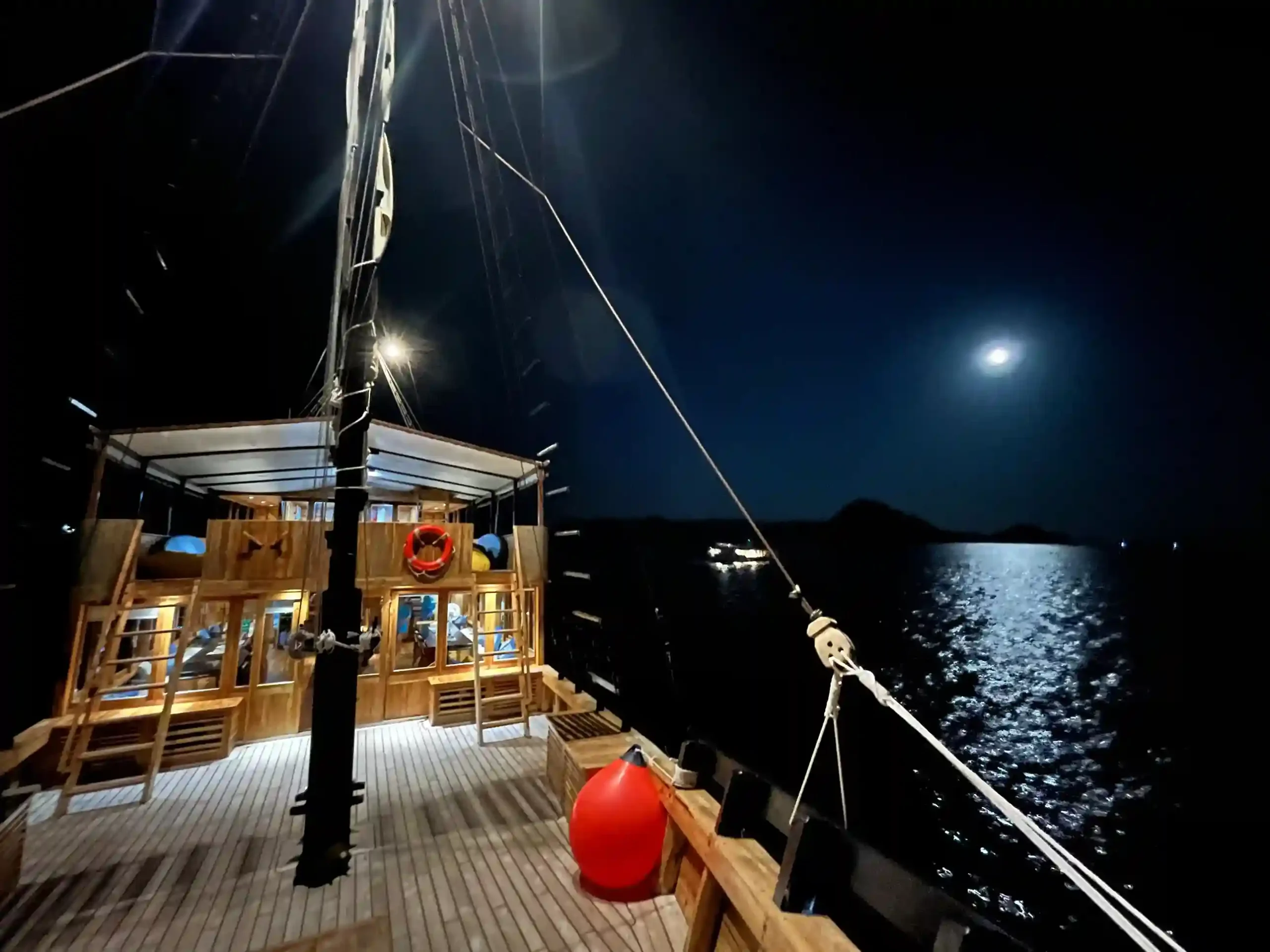
Night diving in Komodo happens in the places the postcards ignore: sheltered anchorages like Wainilu, Siaba Besar, Sebayur Kecil, Pink Beach and Torpedo Alley, where the rubble slopes turn into hunting grounds the moment the light goes. You will not night dive Batu Bolong or Castle Rock — no responsible crew runs torches over a current-swept ridge — and that is exactly why a liveaboard matters here: the boat moors directly above the site, you brief on the dive deck at dusk, splash at slack, and you are under a hot shower twenty minutes after your safety stop. This guide covers the five sites we actually use, the safety rules we refuse to bend, and what comes out after dark.
Last updated: August 16, 2026
Komodo after dark is a different park
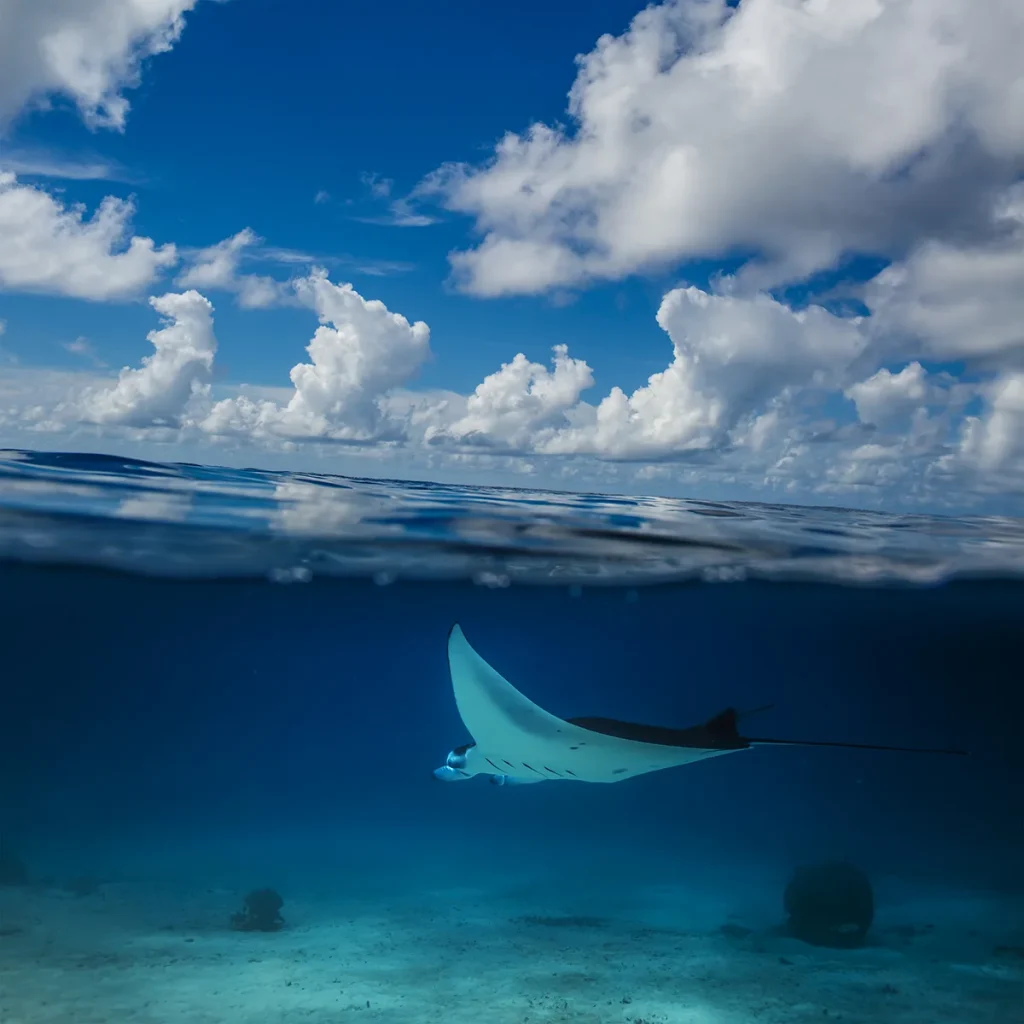
Daylight Komodo is about voltage — mantas stacked on a ridge, trevally hammering fusiliers. Night Komodo has the opposite temperament. The famous theatres go quiet, and the unphotogenic rubble slopes become the main event. Hard corals retract, basket stars unfurl like wire sculpture, and the macro life that spends its day wedged under plate coral walks out into the open. Add bioluminescence — sweep a hand through black water and it sparks green — and you get a second national park layered over the first, open only after sunset.
The five night dive sites we actually run
All five are anchorage dives, deliberately: Pinta moors on the site, entry is a stride off the dive deck, exit is a torch signal to the tender. No long rides in the dark, no surface swims against chop.
Wainilu, Rinca
A rubble slope from five to eighteen metres and, on its night shift, the best muck dive in the park. We often run it dusk-into-dark: mandarin fish rise out of the staghorn debris in the last grey light, then the torches come on for bobtail squid, decorator crabs, Pikachu nudibranchs, and the occasional Spanish dancer the size of a dinner plate, swimming like a flamenco skirt in a fan.
Siaba Besar
A sandy bowl with seagrass and scattered bommies. Green turtles sleep wedged under the ledges — you drift past close enough to count the barnacles — while lionfish learn within minutes to hunt at the edge of your beam. Cuttlefish flash strobing patterns at cardinalfish. Depth and bottom are forgiving, which makes Siaba our usual first-night dive.
Sebayur Kecil
An easy sloping reef minutes from the central sites. Crocodile fish lie on the sand pretending to be sand, stargazers bury themselves to the eyeballs, and sponge crabs trundle past wearing their stolen roofs. Guides send the night-diving sceptics here; the scepticism rarely survives.
Pink Beach
The shallow reef beside the famous sand holds hingebeak shrimp in every crevice, parrotfish asleep in their mucus cocoons, and moray eels hunting free over the coral — a sight day divers almost never get. The profile is so gentle that a torch-carrying snorkeler on the surface can follow the whole dive.
Torpedo Alley, Horseshoe Bay
South Komodo’s black-sand oddity, named for the electric torpedo rays that cruise it after dark. Frogfish, bobbit worms waiting at collar-level in the sand, and the strangest creature list in the park. The water runs colder south, and we anchor here only when route and season allow.
The safety rules we don’t bend
The tide table writes the schedule
Komodo shifts enormous volumes of water between the Flores Sea and the Indian Ocean twice a day. Our night sites sit out of that river, but we still time entries to slack and drop a current check before anyone splashes. If the exchange is big that night, the dive moves or the site changes. Guests occasionally find this fussy at the briefing and never find it fussy underwater.
Lights, ratios, and the tender overhead
Every diver carries a primary torch and a backup, with a marker light on the tank valve so guides can count heads at a glance. We guide at Pinta’s standard PADI 4:1 ratio — four guests to one professional, no exceptions for “easy” sites. While the group is down, the glass-bottom tender idles above the bubbles with navigation lights on; pickup happens where you surface, not where you swim to.
Depth, time, and gas
Night sites here are shallow by design — most of the life is above fifteen metres anyway — and we run conservative profiles because a night dive usually caps a three- or four-dive day. This is where the onboard nitrox system earns its keep: not for depth, but for wide no-decompression margins on repetitive days.
What you actually see after dark
- Spanish dancer nudibranchs — the six-inch red ones that swim, mostly at Wainilu and Pink Beach.
- Bobtail squid — thumb-sized, iridescent, buried in sand until your beam finds them.
- Sleeping green turtles — under ledges at Siaba Besar, breathing slow.
- Hunting lionfish and moray eels — the reef’s night shift, working the edge of your torchlight.
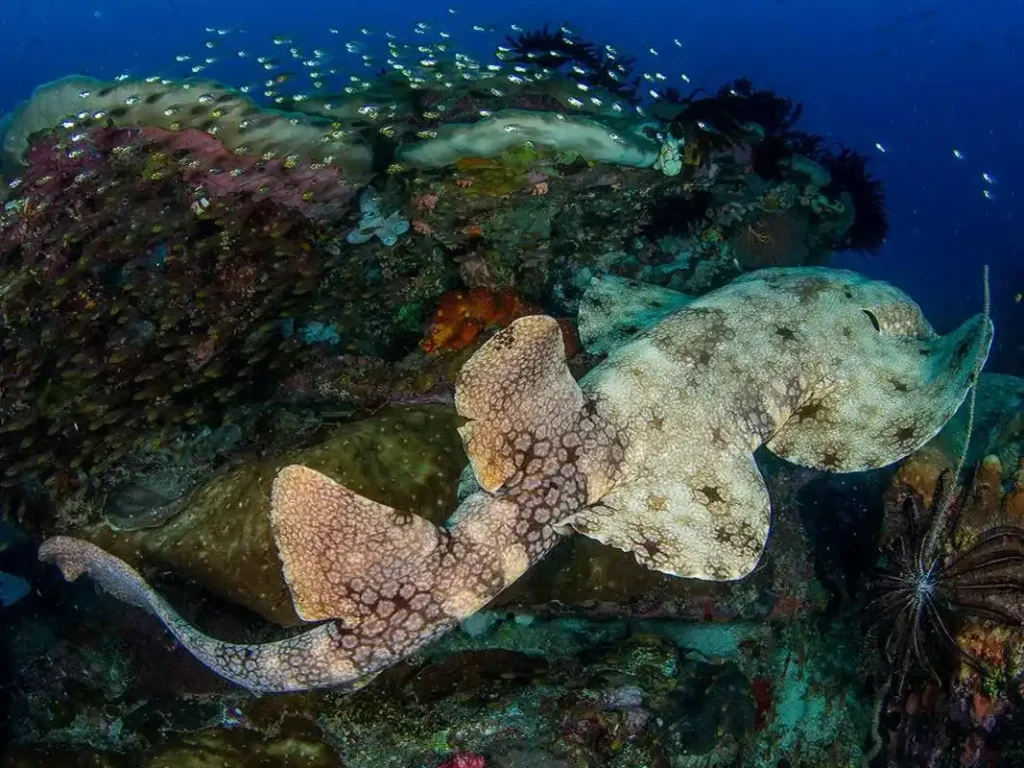
- Stargazers, crocodile fish, frogfish — ambush specialists you step over by day without knowing.
- Torpedo rays and bobbit worms — Horseshoe Bay’s south-coast exclusives.
- Bioluminescent plankton — torches off at the safety stop, wave an arm, and the water answers.
Planning a 2027 night-diving charter
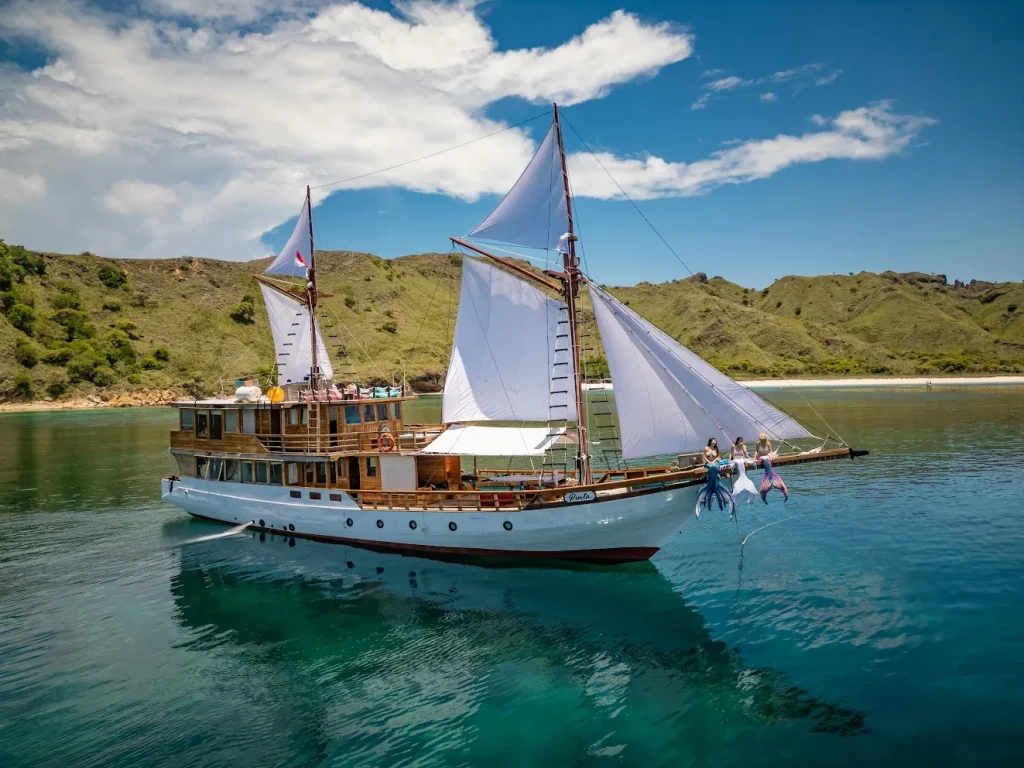
Pinta was built for exactly this rhythm: a 30-metre phinisi — ironwood hull and teak decks laid in the Bulukumba shipwright tradition — launched in 2021 and set up as a dedicated dive vessel rather than a cruise boat that happens to carry tanks. Fourteen guests across five en-suite cabins share a purpose-built dive deck, a nitrox system, and a glass-bottom tender that doubles as a night-viewing platform for anyone staying dry. Pinta sails within the fleet of Komodo Luxury — a registered Indonesian PT under Juara Holding Group Limited with 1,500+ verified guest reviews (4.9/5); the full fleet is listed on the operator’s site. Published 2027 full-boat charter rates run USD 11,250–37,900 by route and season.
Two park facts worth knowing before you plan. Komodo National Park has capped entry at 1,000 visitors per day since April 2026, which thinned daytime crowds and left the evening anchorages the quietest they have been in a decade. And the M7.7 earthquake of 15 August 2026 produced no destructive tsunami — the recorded wave was 0.36 metres — and the park reopened the same day; 2027 itineraries are unaffected.
If you are still weighing options, it helps to compare Komodo liveaboard itineraries side by side and to skim an overview of boats departing Labuan Bajo, since every route in the park starts and ends at that harbour. Mixed groups sometimes weigh us against Neptune, a sister vessel in the same fleet with a stronger cruising emphasis, or Yumana, another sister vessel in the same fleet — and keep Pinta for trips where diving leads the schedule. That is the honest division of labour: they carry the sunset crowd beautifully; we carry the people who ask about tide tables.
Night diving in Komodo: FAQ
Do I need an Advanced Open Water certificate to night dive in Komodo?
No. The night sites are shallow and sheltered, and guides run at 4:1. What we ask for is solid buoyancy and calm in the dark rather than a specific card — an AOW or a night adventure dive helps, but it is not a gate.
Aren’t Komodo’s currents dangerous at night?
At the famous ridges, yes — which is why nobody night dives them. Night sites are bays and slopes that sit out of the main flow, dived at slack after a current check. The tide table, not the itinerary, writes the schedule.
How cold is the water after dark?
Central and northern anchorages sit around 26–28°C, and a 3 mm suit is enough for most people. Torpedo Alley in the south can drop to 22–24°C; if your route turns into Horseshoe Bay, pack 5 mm and a hood.
Can non-divers experience any of this?
Yes. The glass-bottom tender runs over torch-lit shallows while the group is down, bioluminescence shows from the swim platform on moonless nights, and confident snorkelers can float above Pink Beach’s shallow reef with a guide.
Are night dives part of a Pinta charter?
They are written into the dive plan wherever the anchorage allows — typically several across a week-long route, always subject to that night’s conditions. Published 2027 full-boat charter rates run USD 11,250–37,900.
Frequently Asked Questions
Do I need an Advanced Open Water certificate to night dive in Komodo?
No. The night sites are shallow and sheltered, and guides run at 4:1. What we ask for is solid buoyancy and calm in the dark rather than a specific card — an AOW or a night adventure dive helps, but it is not a gate.
Aren't Komodo's currents dangerous at night?
At the famous ridges, yes — which is why nobody night dives them. Night sites are bays and slopes that sit out of the main flow, dived at slack after a current check. The tide table, not the itinerary, writes the schedule.
How cold is the water after dark?
Central and northern anchorages sit around 26–28°C, and a 3 mm suit is enough for most people. Torpedo Alley in the south can drop to 22–24°C; if your route turns into Horseshoe Bay, pack 5 mm and a hood.
Can non-divers experience any of this?
Yes. The glass-bottom tender runs over torch-lit shallows while the group is down, bioluminescence shows from the swim platform on moonless nights, and confident snorkelers can float above Pink Beach’s shallow reef with a guide.
Are night dives part of a Pinta charter?
They are written into the dive plan wherever the anchorage allows — typically several across a week-long route, always subject to that night’s conditions. Published 2027 full-boat charter rates run USD 11,250–37,900.

 Komodo Diving Guides