Take wide-angle to the northern pinnacles and manta channels, where visibility runs 15 to 30 metres, and macro to the south, where upwelling drops visibility to 10 to 20 metres and builds the park’s densest small life. Trying to shoot both on one dive is the most common mistake in Komodo.
Pick the lens by zone, not by day
Lens choice against Komodo conditions
Zone or site
Visibility
Lens
Why
Castle Rock, Crystal Rock
15–30 m
Wide / fisheye
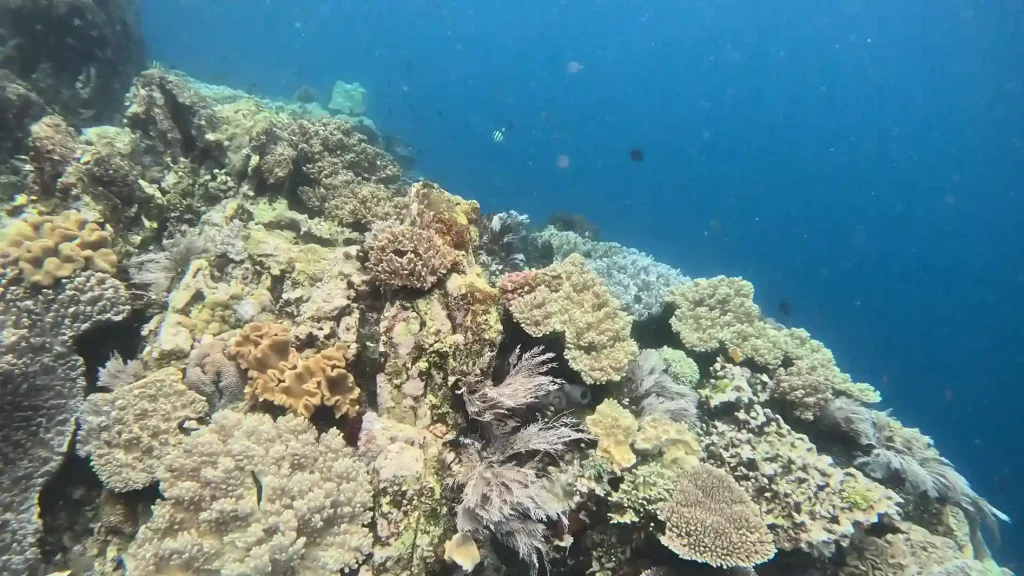
Sharks in the blue at distance; you cannot get close in that current
Batu Bolong
15–30 m
Wide
Reef-scape and fish biomass; the subject is the wall itself
Karang Makassar (mantas)
15–25 m
Wide / fisheye
Animals up to 4 m across; nothing else fits them in frame
Because the boat changes lens on you, not the other way round, the practical rule on a Komodo charter is to know the next dive site before you close the housing. The dive team brief the following morning the night before precisely so that camera divers can set up. Ask for that briefing if it is not offered.
Settings that survive a current dive
Wide-angle in the blue
Shoot manual, keep the shutter fast enough to freeze a moving animal and yourself — 1/125 upward, faster in a drift — and use aperture to control the blue rather than the exposure of the subject. Strobes go wide and back to avoid lighting the particulate between you and a manta. In Karang Makassar’s gentle drift you will not have time to reposition, so set for the water and shoot what arrives.
Macro in the cold south
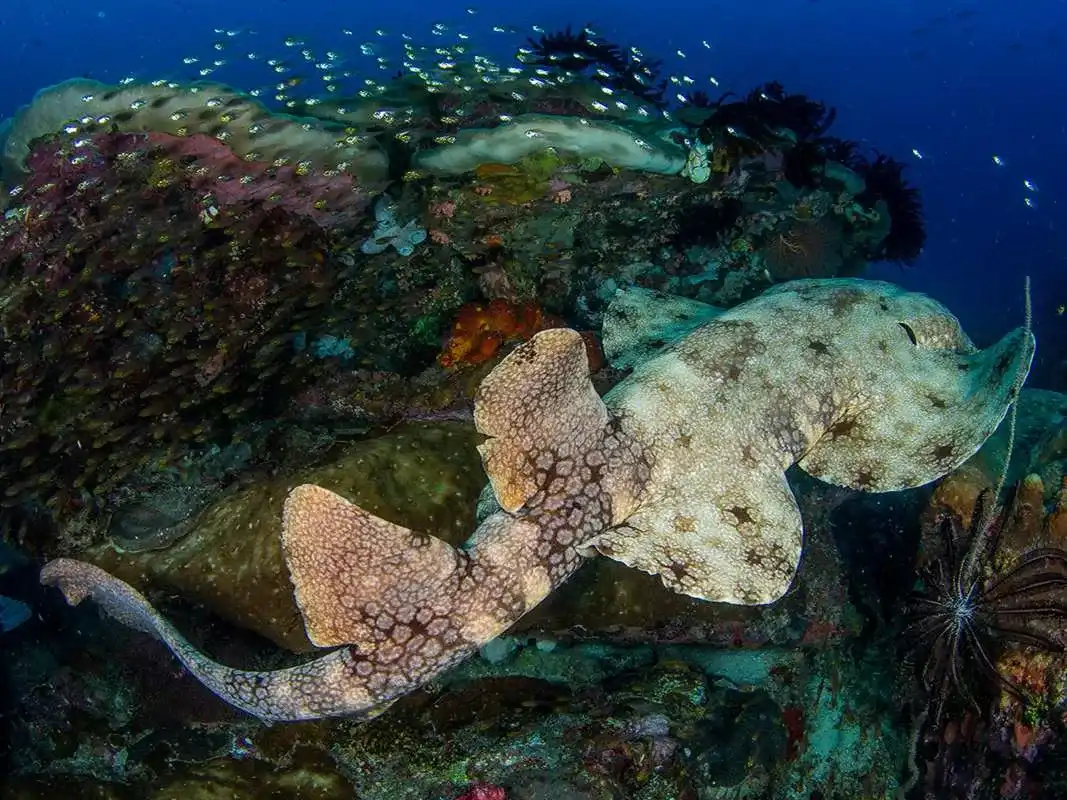
The opposite discipline. Slow down, get negative or neutral, use a focus light, and accept that in 12 metres of green water your strobes are the entire light source. Buoyancy is the actual skill here: the southern reefs are crinoid-covered and fragile, and a photographer bracing on the reef to get a pygmy seahorse shot is doing exactly the damage the park exists to prevent.
Housing discipline on a boat
O-ring routine, once a day, in the same place. Grease, seat, inspect for a hair. Most floods are a hair.
Assemble in the dry, not on a rolling dive deck. Ask for the shaded interior; there is space on board.
Freshwater rinse after every dive and press every button while submerged. Salt in a button is a slow leak forming.
Charge overnight. Pinta carries 30 kVA and 15 kVA gensets with an 8 kVA emergency unit, so power is stable, but bring your own multi-plug.
Never hand your rig to someone in the tender without a strap. Rig in, then diver in.
Spare o-rings, silicone, a blower and a microfibre cloth. Nothing is buyable at sea.
Photographing the animals without ruining the encounter
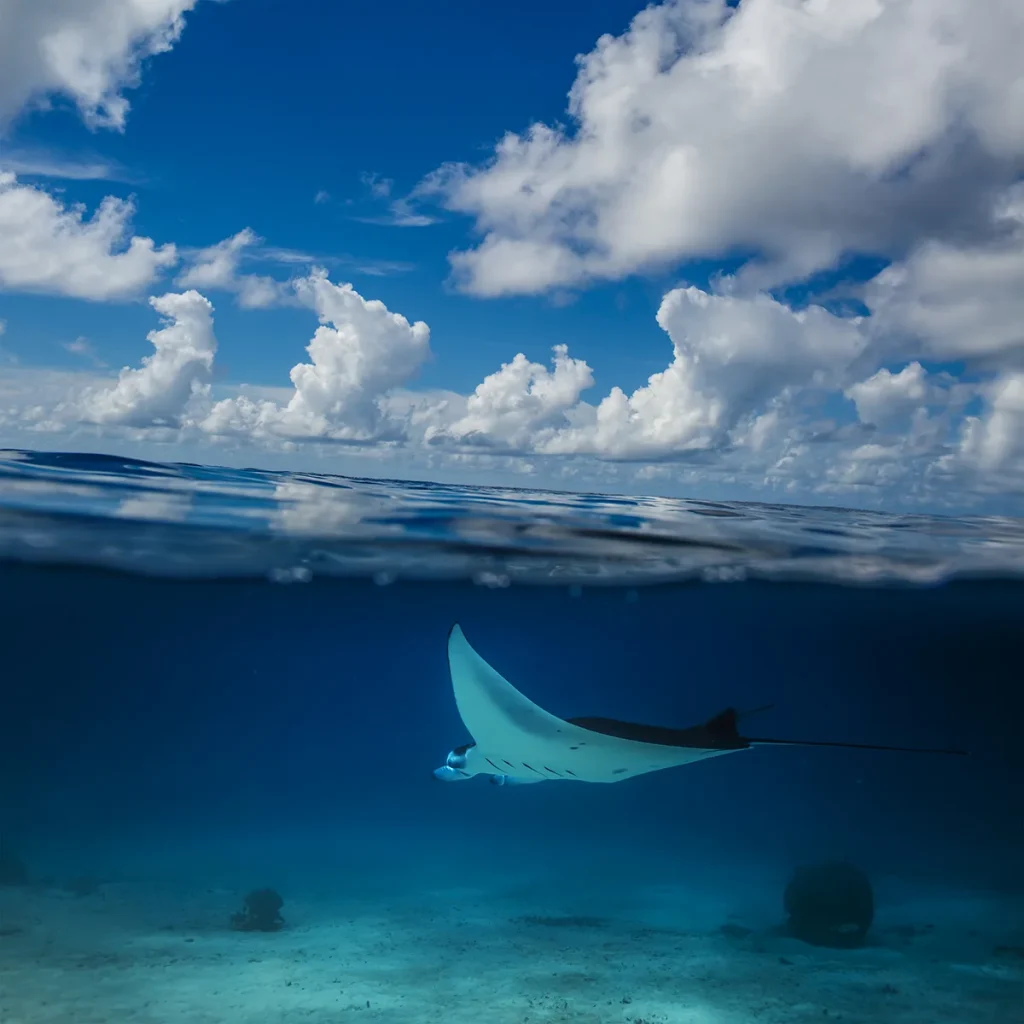
Mantas at Karang Makassar approach divers who are still and low and leave divers who swim at them. Do not position yourself above an animal; bubbles from below end a pass. No flash straight into an approaching manta’s face. At the shark pinnacles you are hooked in and stationary anyway, which is why Castle Rock produces better shark images than sites where you are free-swimming — the animals come to a diver who is not moving.
The rule that covers everything: the encounter comes first, the photograph second. That is not sentimentality — a photographer who chases gets one bad frame, and a photographer who waits gets ten good ones.
Drones and topside
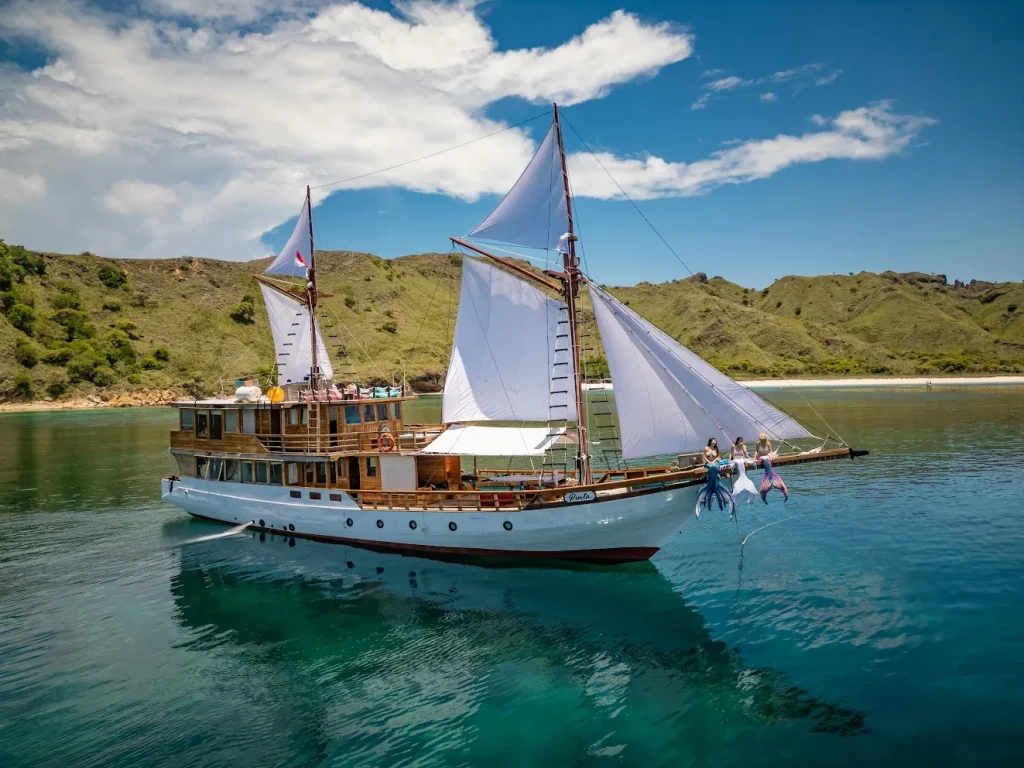
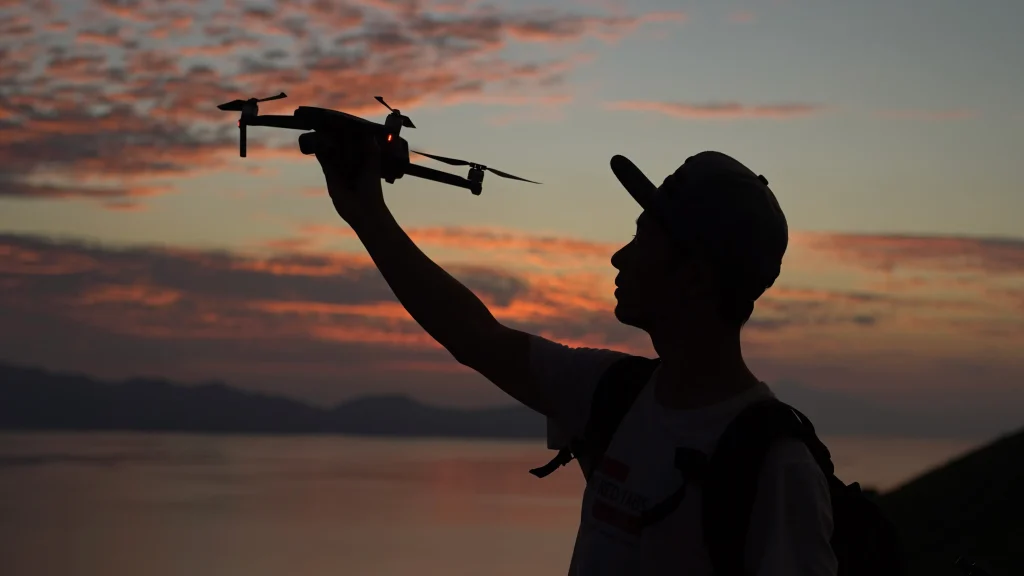
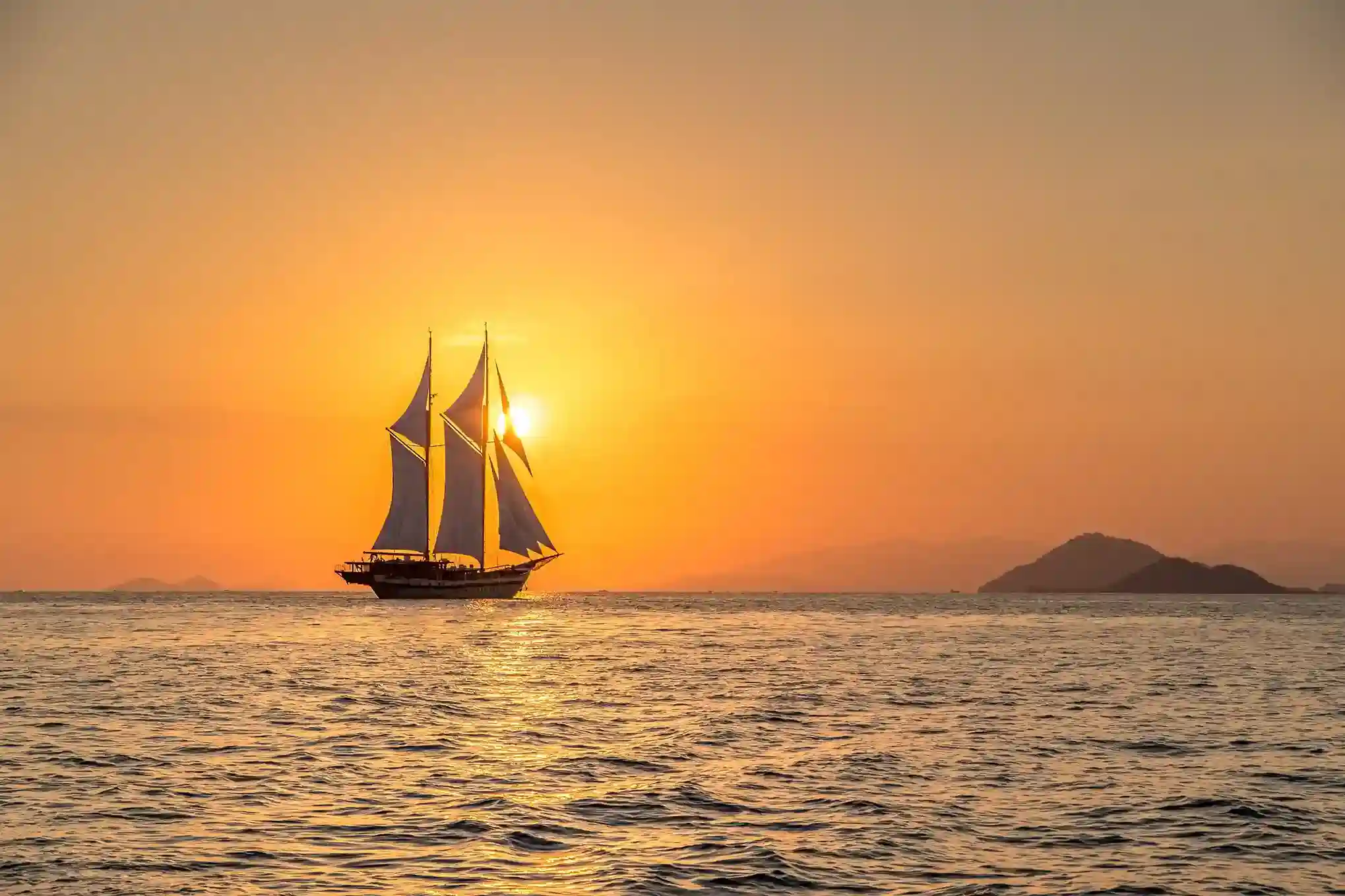
Padar’s ridgeline, Pink Beach and the phinisi under sail are the shots people come home with, and a drone is the obvious tool. It is also regulated inside a national park — there is a permission process through the park authority, and we have not been able to verify a published official tariff. Ask your operator to handle the request in advance rather than launching and hoping.
What the boat gives you
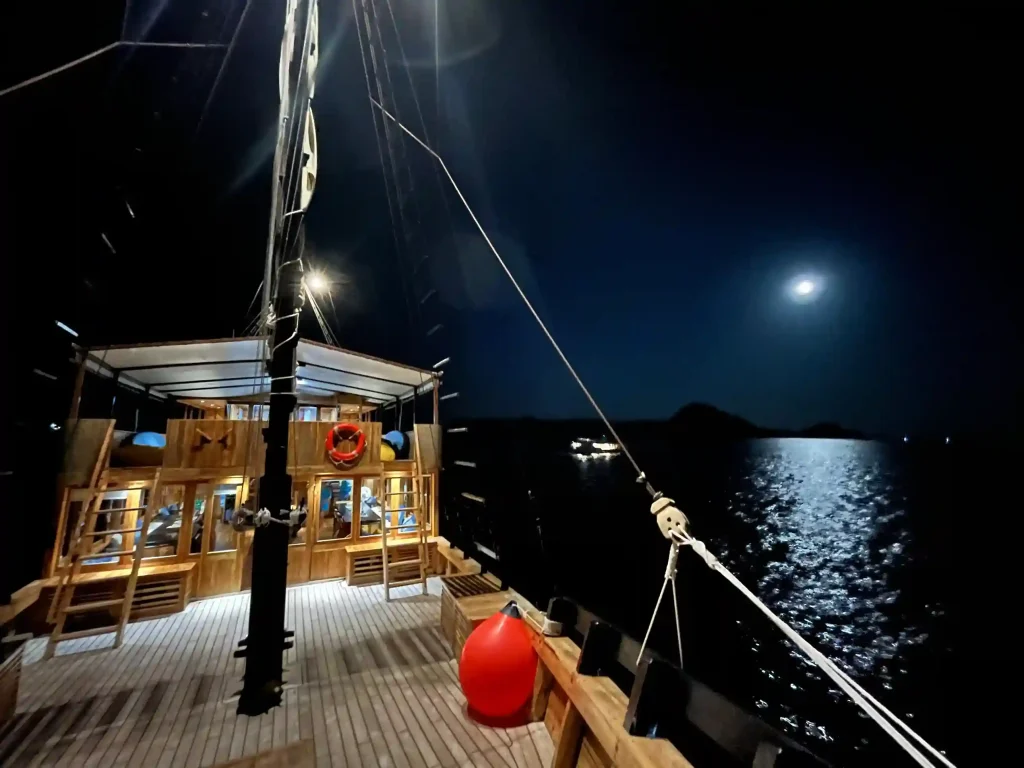
Camera work depends on unglamorous things: a stable platform, a dry area, freshwater rinse, reliable power and a crew who will hand a rig down carefully. Pinta is a 30-metre by 6-metre ironwood and teak phinisi built in 2021 carrying fourteen guests in five en-suite cabins with eight crew and 5,000 litres of fresh water, with a glass-bottom tender for drops and pick-ups. On the charter side, a longer trip is the real photographic variable: 22 to 26 dives across eight days gives you repeat visits to the same sites in different light, which is where portfolios come from.
Frequently asked questions
What lens should I bring for diving in Komodo?
Wide-angle or fisheye for the northern pinnacles and the manta channel at Karang Makassar, and macro for the southern sites where visibility falls to ten to twenty metres and the small life is densest.
Can you photograph mantas in Komodo?
Yes, at Karang Makassar, where mantas pass through a channel at 8 to 18 metres in a gentle drift. Shoot wide, stay low and still, keep strobes angled out, and never position yourself above an animal.
Is there a place to charge camera gear on a Komodo liveaboard?
Yes. Pinta carries 30 kVA and 15 kVA generators with an 8 kVA emergency unit, so overnight charging is stable. Bring your own multi-plug and use the freshwater rinse after every dive.
Are drones allowed in Komodo National Park?
Drone use inside the park requires permission from the park authority, and we cannot verify a published official tariff. Ask your operator to arrange the request in advance rather than launching without one.
How many dives do I need for a serious photo trip in Komodo?
More than a short charter gives you. An eight-day trip returning twenty-two to twenty-six dives allows repeat visits to the same sites in different light and conditions, which is what produces consistent images.
Pinta is operated and sold by Komodo Luxury, the Labuan Bajo charter operator running trips in Komodo National Park since 2015. Reservations, dive-team questions and date holds: WhatsApp +62 811 3823 875 or sales@komodoluxury.com.
Share this
Sailing This Season?
Send your dates and we will check the calendar before you book anything.

 Komodo Diving Guides