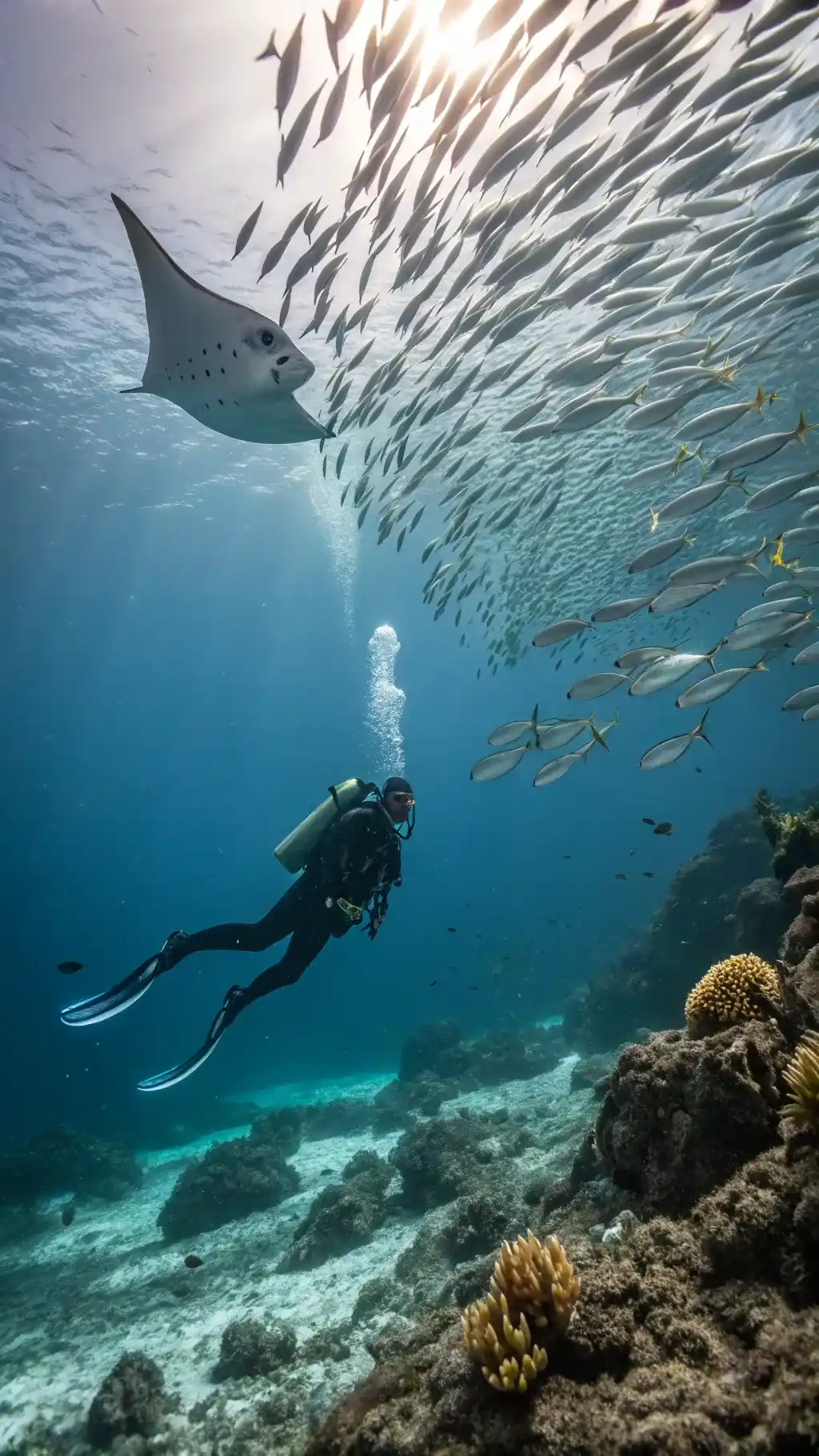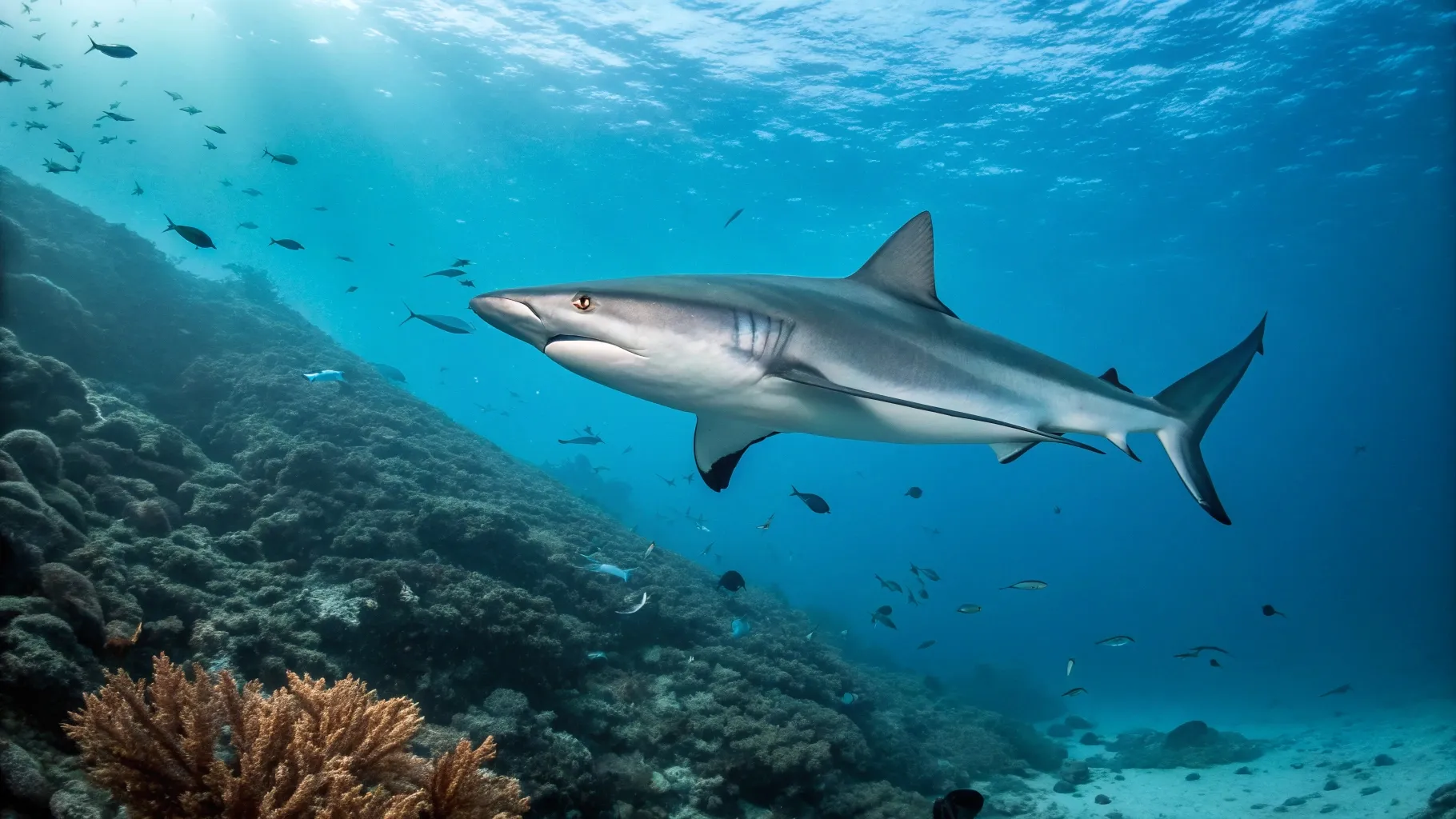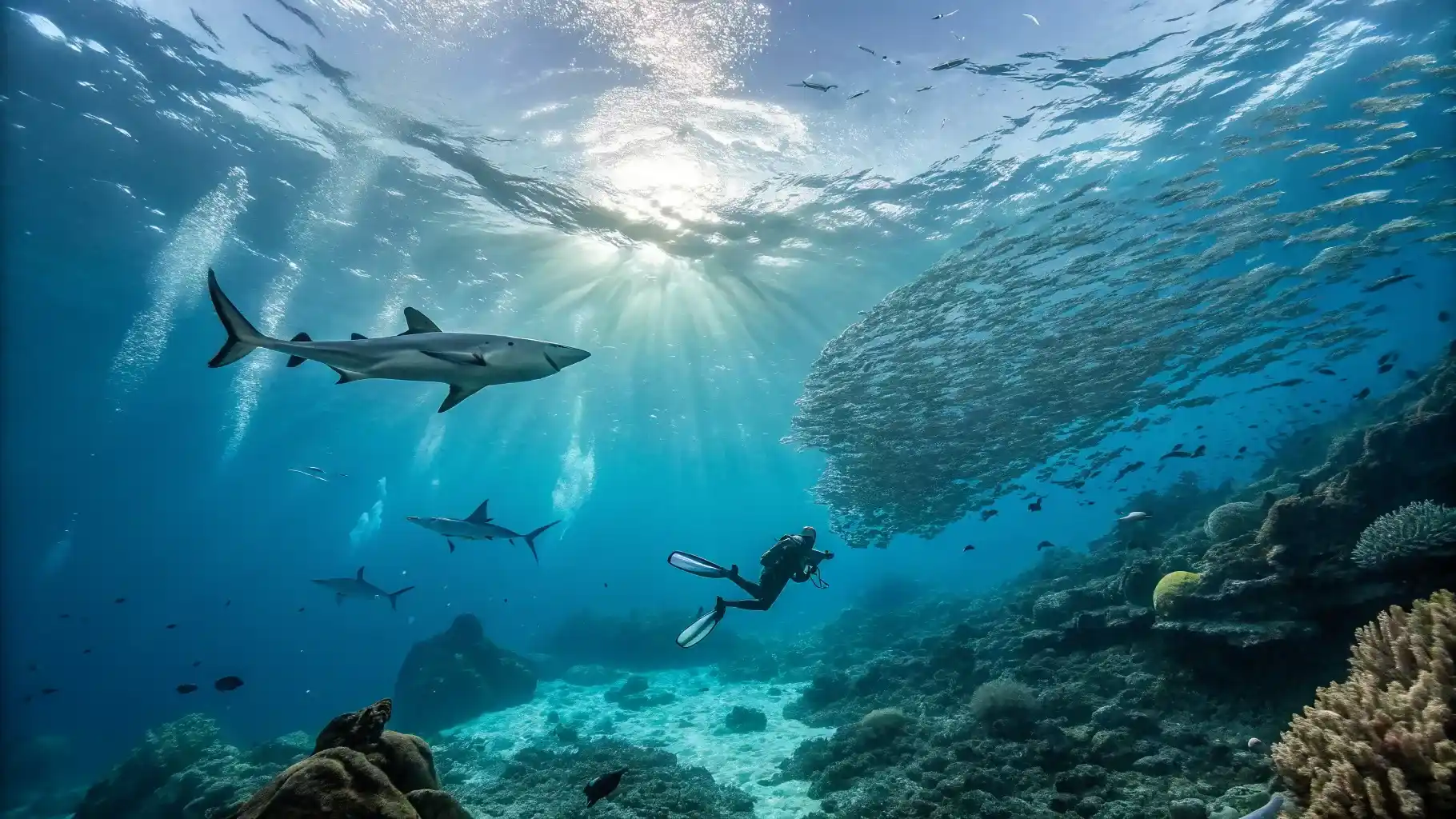
Komodo currents are tidal, not constant. Water moving between the Flores Sea and the Indian Ocean accelerates through the straits, peaking a few hours after each tide change and easing to a workable window around slack. The sites with genuine down-current risk are Tatawa Kecil, The Cauldron, Castle Rock and Batu Bolong. Every Pinta diver carries a computer and an SMB, reef hooks are used on the strong pinnacles, and emergency oxygen, a life raft, VHF, SSB and a powered tender are on board.
Why Komodo runs so hard
Komodo National Park sits on the boundary between two water bodies at different temperatures and levels. Twice a day the tide moves an enormous volume of water between them, and the islands force that volume through narrow channels. The result is a place where the same dive site is a gentle drift at one hour and a washing machine three hours later. This is also precisely why the diving is world-class: current delivers nutrients, nutrients feed plankton, plankton feeds everything up to mantas and sharks.
What that means practically is that timing beats site choice. A good Komodo dive guide is not someone who knows the best sites — everyone knows the best sites — but someone who knows which site is diveable at 09:40 on a spring tide with the moon where it is this week. Cruise speed matters here too: Pinta’s 8–10 knot Mitsubishi 8DC1 makes it possible to reposition to the site whose window is open rather than diving the site you happen to be moored next to.
Current strength and the window we dive
| Site | Typical strength | Down-current risk | How we dive it |
|---|---|---|---|
| Siaba Besar | Light to moderate | None | Any time — sheltered bay, used for check dives and night dives |
| Pink Beach reef | Light | None | Any time |
| Karang Makassar | Gentle to moderate drift | None | Dived as a drift with the tender following the SMB |
| Tatawa Besar | Moderate to strong drift | Low | One-way drift with the flow, tender pick-up downstream |
| Mawan | Moderate to strong | Low | Timed to the softer half of the tide; group stays on the slope |
| Batu Bolong | Constant, moderate to strong | Yes — on the exposed faces | Dived on the sheltered side, staying above the drop-off; never dived on peak flow |
| Golden Passage | Strong channel drift | Moderate | One-way drift on the incoming tide, SMB up early |
| Crystal Rock | Strong | Yes | Timed to the slack window, hook in on the upcurrent face |
| Tatawa Kecil | Very strong | Yes — the highest in the park | Advanced divers only, and cancelled outright if the tide is wrong |
| Castle Rock | Very strong | Yes | Negative entry, fast descent, reef hook mandatory |
| The Cauldron (Shotgun) | Very strong through the channel | Yes | Only run on the correct tide direction; the flush is the point of the dive |
| Manta Alley | Moderate to strong with surge | Low, but surge is real | Negative entry; called off in heavy southern swell |
Note the last column on Tatawa Kecil and The Cauldron: cancelled if the tide is wrong. A boat that runs every site every day regardless of conditions is not being generous, it is being careless. Expect at least one substitution on any Komodo itinerary and treat it as a sign the crew are reading the water rather than reading a schedule.
What a down-current actually feels like — and what to do
A down-current is water being pushed down a wall or off a pinnacle. The first sign is usually not a sensation but a number: your depth gauge increasing while you are doing nothing. Bubbles going sideways or downwards is the second sign. The protocol every Pinta diver is briefed on:
- Do not fight it vertically. Finning up against a down-current empties a tank in minutes and rarely wins.
- Swim horizontally, away from the wall, towards open water or towards the reef face — whichever the briefing identified as the escape direction for that site.
- Add air in small increments, not a long blast, and be ready to dump on the way up when you clear the column.
- Get to the reef and hook or hold on dead substrate if you can reach it.
- Signal your buddy early. Separation happens fast in moving water.
- Deploy the SMB as soon as you are stable, so the tender knows where you are before you surface.
Safety equipment carried on Pinta
| Category | On board |
|---|---|
| Buoyancy and rescue | Life raft, lifebuoys, life vests, flares |
| Navigation and comms | GPS chart plotter, compass, SSB radio, VHF radio, walkie-talkies for the tender |
| Fire | Fire extinguishers (APAR) at fixed stations |
| Surveillance | CCTV on the vessel |
| Tender | Glass-bottom speedboat with two 40 HP Yamaha engines — used as the pick-up boat on every drift dive |
| Diver-carried | Personal dive computer (mandatory), SMB per buddy pair, reef hook on the strong pinnacles |
| Medical | First aid kit and emergency oxygen |
| Crew | Eight crew, including guides working at a 4:1 ratio |
Two things worth saying plainly. First, the nearest recompression chamber to Komodo is not in Labuan Bajo — evacuation means a flight. Diver insurance that explicitly covers hyperbaric treatment and evacuation is not optional on a liveaboard, and we ask for the policy number before departure. Second, flying after diving requires a surface interval; plan a minimum of 18 to 24 hours between your last dive and your flight out of Labuan Bajo, which is why our itineraries finish in the morning.
Best for — reading conditions before you book
- Best months for gentle current: April to June and September to November, when the sea state is calmest overall.
- Best for divers uneasy about current: a central-Komodo itinerary built on Siaba, Pink Beach, Karang Makassar and Tatawa Besar.
- Best for divers who want the strong stuff: a 6-day charter or longer with Advanced certification and 50 dives, so the crew can chase tide windows across the whole park.
- Least suitable: divers with fewer than 30 logged dives who insist on the northern pinnacles. We will decline, and you should be suspicious of any operator that does not.
Divers who love current for its own sake often end up looking east afterwards — the Dampier Strait in Raja Ampat runs on the same physics with warmer, clearer water, and the itineraries are set out at luxuryrajaampat.com.
Frequently asked questions
How strong are the currents in Komodo?
They vary from light in sheltered bays like Siaba Besar to very strong at Castle Rock, Tatawa Kecil and The Cauldron. Current is tidal, so the same site can be gentle in the slack window and unmanageable a few hours later.
Which Komodo dive sites have down-currents?
Tatawa Kecil carries the highest risk, followed by Castle Rock, Crystal Rock, The Cauldron and the exposed faces of Batu Bolong. All are Advanced-only sites and all are cancelled when the tide is wrong.
What should I do in a down-current?
Do not fight it vertically. Swim horizontally away from the wall towards the escape direction given in the briefing, add air in small increments, reach the reef and hold on dead substrate if possible, signal your buddy early and deploy your SMB once stable.
Is Komodo safe for diving?
Yes, with the right level and the right operator. The requirements are honest certification screening, tide-aware site selection, a personal dive computer, an SMB per buddy pair, a powered pick-up tender and diver insurance covering hyperbaric treatment and evacuation.
Do I need a reef hook in Komodo?
At Castle Rock it is effectively mandatory, and it is useful at Crystal Rock and Golden Passage. Hooks are placed on rubble or dead substrate only, never on living coral.
When is slack water in Komodo?
Around the tide change, and it shifts daily with the lunar cycle, so there is no fixed clock time. Guides work from the current tide tables each morning, which is why the site order on a Komodo itinerary changes during the trip.
How long should I wait to fly after diving in Komodo?
Plan 18 to 24 hours between your last dive and your flight from Labuan Bajo. Pinta itineraries finish in the morning specifically so that same-evening or next-morning flights remain workable.
Is dive insurance required?
We ask for a policy number covering hyperbaric treatment and medical evacuation before departure. The nearest recompression facility is not in Labuan Bajo, so evacuation means a flight.
Book Pinta Liveaboard
Conditions decide the itinerary in Komodo, not the brochure — the desk will tell you what your chosen dates realistically allow. Pinta is operated and marketed by Komodo Luxury (part of Juara Holding Group, running Komodo trips since 2015). Reservations, cabin availability and current-season rates: WhatsApp +62 811 3823 875 or email [email protected]. Quote the trip length and your certification level in the first message and the desk can hold a date the same day.
Keep reading
- Raja Ampat vs Komodo for divers — how current, visibility and cost compare between the two.
- Liveaboard vs land-based diving — dive counts, transit time and total cost side by side.
- Pinta dive FAQ hub — 100 answers on diving and snorkelling in Komodo.